Out here on the farm, I have built coops from scrap lumber, old barn doors, and once even a broken trailer.
These days though, I will tell you plain and simple: a good prefab chicken coop with run can save your back,
your time, and a whole lot of frustration.
When folks ask me about keeping a small flock, the first thing I look at is their coop. You can feed the
best grain in the world, but if your house and run are wrong, your hens will tell you with bare backs,
muddy feet, and empty nest boxes. A solid prefab chicken coop with run takes care of shelter and exercise
in one shot, and if you pick it right, your birds stay dry, safe, and laying strong.
I remember the first winter I tried to get clever and build “the world’s cheapest coop” from old pallets.
Let us just say the wind whistled through that thing like a freight train. My hens lined up at the back
door of my house every morning, giving me the stink eye. I finally swallowed my pride, bought a prefab
coop with a run, and spent the next storm watching my birds scratching, dry and happy, while I stayed
inside with coffee instead of a hammer.
Farmer’s quick rule
Pick a prefab coop that you can clean in under 10 minutes and reach every corner without crawling.
If you cannot keep it clean, you will not, and your hens will pay the price.
Why a prefab chicken coop with run makes sense for small flocks
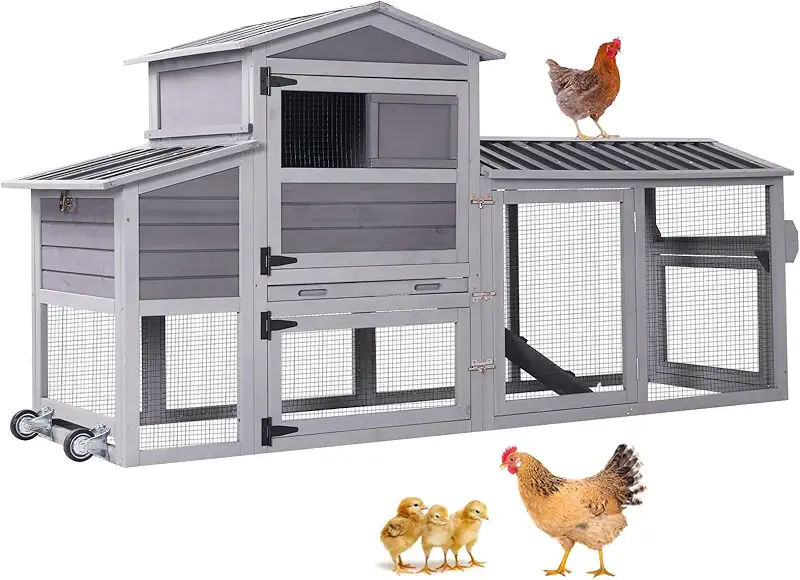
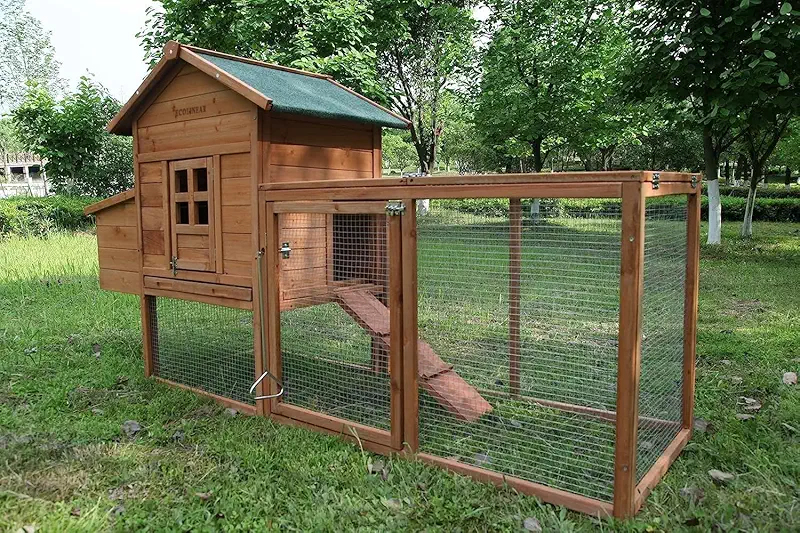
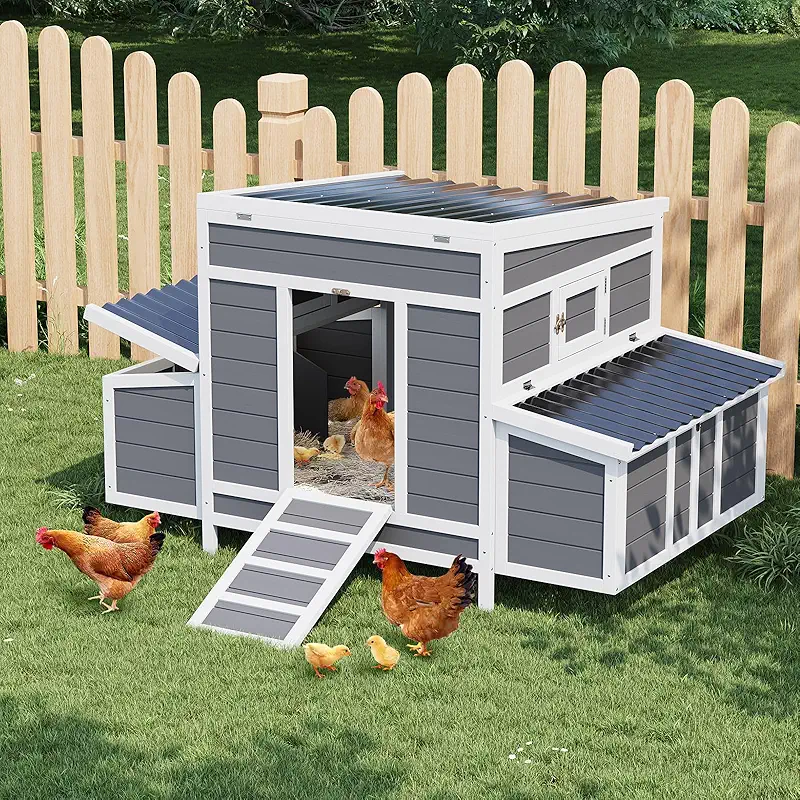
A prefab chicken coop with run is simply a ready-made hen house attached to an enclosed outdoor space.
The house keeps birds dry and safe at night, and the run gives them room to walk, scratch, dust bathe,
and be proper chickens during the day. You are basically buying your birds a little cabin with a fenced yard.
Most folks I talk to are keeping between four and ten hens. For that size flock, a prefab setup is often the
sweet spot. It shows up in pieces, you bolt it together in an afternoon, and your hens can move in the same
day. No weeks of measuring, cutting, and re-cutting boards. No arguing with warped lumber that looks straight
enough in the store and bends like a banana at home.
Real-world advantages
Fast to assemble, even if your toolbox is mostly a butter knife and enthusiasm.
Designed with doors, nest boxes, and perches already in the right places.
Built-in run keeps birds safe from neighborhood dogs, hawks, and raccoons.
Easier to move around the yard if you want to rest the ground.
Predictable size, so you know how many hens it can truly support.
Potential drawbacks
Cheaper models can cut corners on wood thickness and hardware.
Factory “hen counts” are often too optimistic for real comfort.
Low roofs can make cleaning a bit of a back workout.
Some runs need extra reinforcement if you have serious predators.
How many hens really fit in a prefab coop with run?
The box might claim “up to 8 chickens,” but that is like my old truck claiming “up to 25 miles per gallon.”
Technically possible, if you are going downhill with a tailwind. In real life, I use simpler numbers.
Inside coop space: aim for at least 4 square feet per bird.
Run space: 8–10 square feet per bird is comfortable for small flocks.
Roost bar: about 8–10 inches of perch per hen.
Nest boxes: 1 box for every 3–4 hens (they will share).
If a prefab chicken coop with run says “6–8 chickens,” I usually treat it as good for 4–5 birds, maybe 6 if
they also get some supervised free-range time. Crowded hens get cranky. Cranky hens peck feathers, bully
lower-ranking birds, and sometimes stop laying. Give them a little elbow room and everybody, including you,
sleeps better.
Key features to look for in a prefab chicken coop with run
Before you bring any coop home, take a breath and think like a chicken. If you were walking around barefoot,
sleeping on a perch, and laying eggs in a box, what would you care about? Warmth, dryness, safety,
and enough space to get away from the bossy hen. Let us walk through the main points.
1. Solid frame and predator-proof wire
I have had raccoons peel cheap wire like it was tinfoil. A good prefab chicken coop with run should use
hardware cloth or at least heavy-gauge wire, not flimsy decorative stuff. Check how the wire is fastened
to the frame. Staples every couple inches, firmly driven, hold much better than a few lazy nails.
The frame should feel sturdy when you give it a little shake. If the whole thing rattles and flexes
when you push on it, imagine what a determined dog or coyote can do. Out here, I trust nothing that feels
flimsy; predators are patient and hungry.
Farm check: quick shake test
Once the coop is assembled, grab a corner of the run and shake it like a curious raccoon would.
If the latches jump, panels gap, or screws wiggle, upgrade the hardware before you put birds inside.
2. Roof, water protection, and wind
Your hens hate drafts, but they also hate stale, wet air. A decent prefab chicken coop with run will
have a solid roof over the house, and often over part of the run too. Look for:
Roof overhangs that keep water away from doors and nest boxes.
Roofing that will not soak up water or rot in a year.
Vent openings up high that let moisture out but do not blast birds with wind.
One winter storm I watched rain blowing sideways, and the only dry spot for my flock was the covered end of
the run. They were out there muttering and scratching like it was just another day, while I was thinking
about moving south with the geese.
3. Easy access for cleaning
Here is the unglamorous truth: most chicken keeping is shoveling, scooping, and refilling things. If your
prefab chicken coop with run is annoying to clean, you will put it off, and your birds will be standing
in yesterday’s mess. Look for:
A big rear door or side panel that opens wide.
Removable or slide-out trays under the roosts.
Enough headroom that you can reach the back corners.
I am old enough now that I rate coops by how little bending they make me do. If I can clean it in my
barn boots without cussing, that is a keeper.
Different styles of prefab chicken coop with run
Not every yard or flock is the same. Over the years I have used small A-frame tractors, tall walk-in runs,
and long low coops that looked like a tiny chicken motel. Here are a few common styles and what they are
good for.
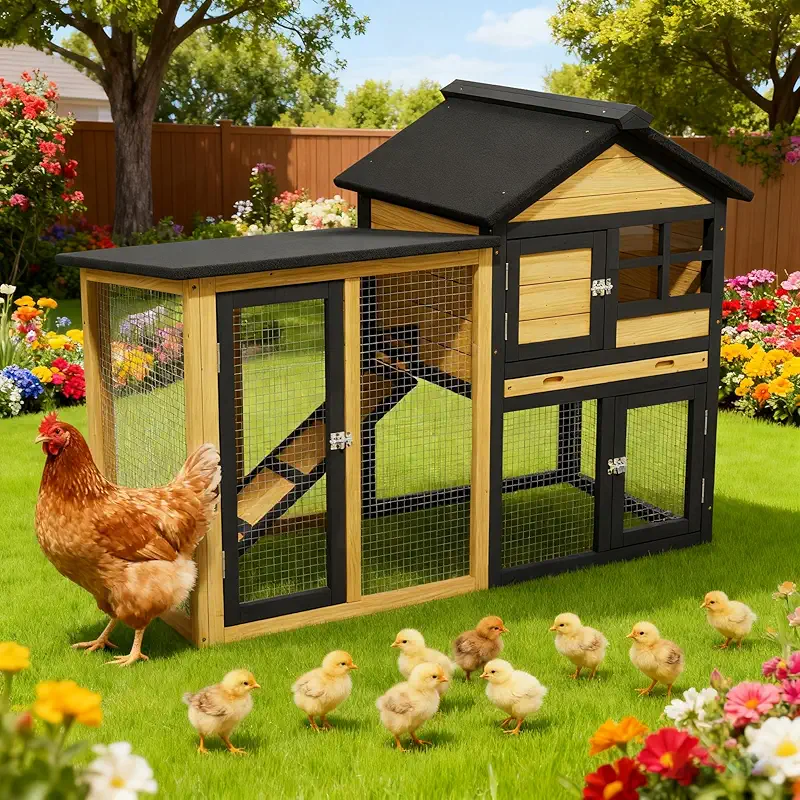
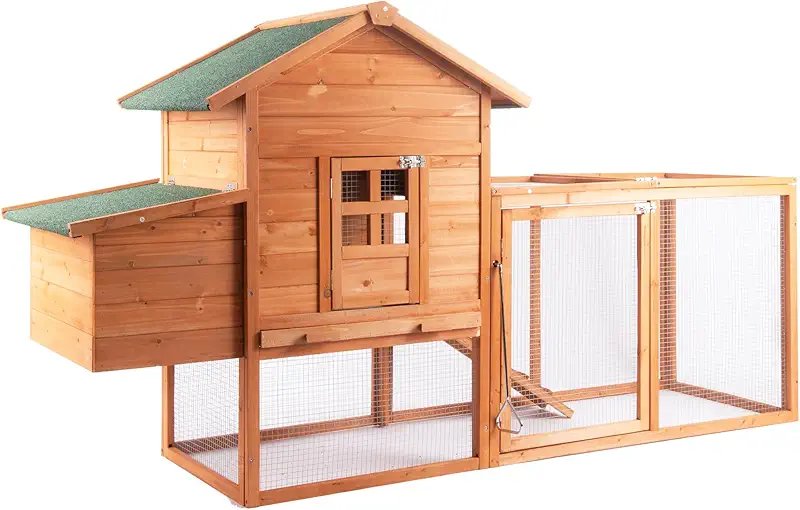
Compact coop with attached run
This style keeps everything in one neat footprint. House on one end, run on the other, usually with a
little ladder in between. Great for small yards, first-time keepers, or rental properties where you
might need to move things later.
Works best for 3–4 hens, maybe 5 with extra free-range time.
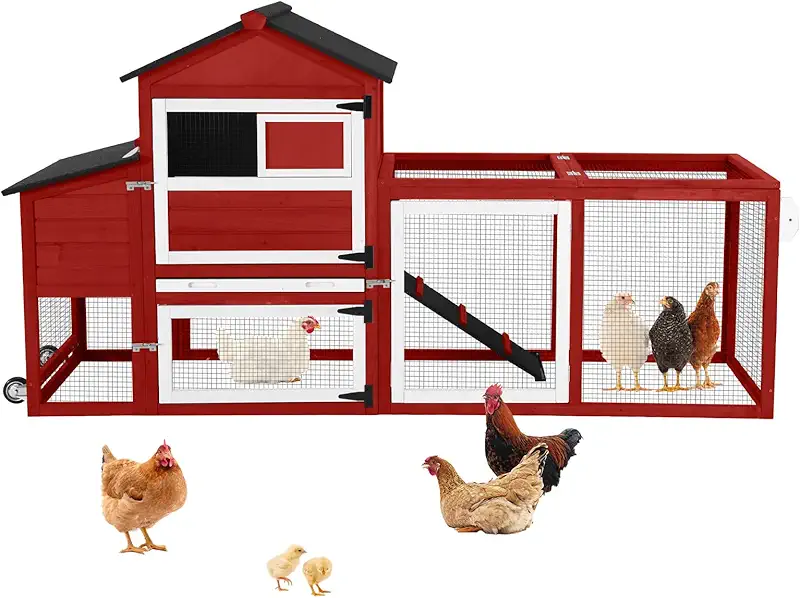
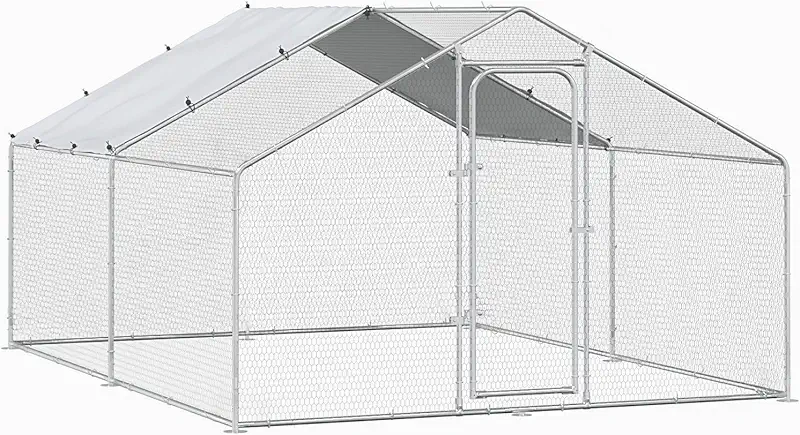
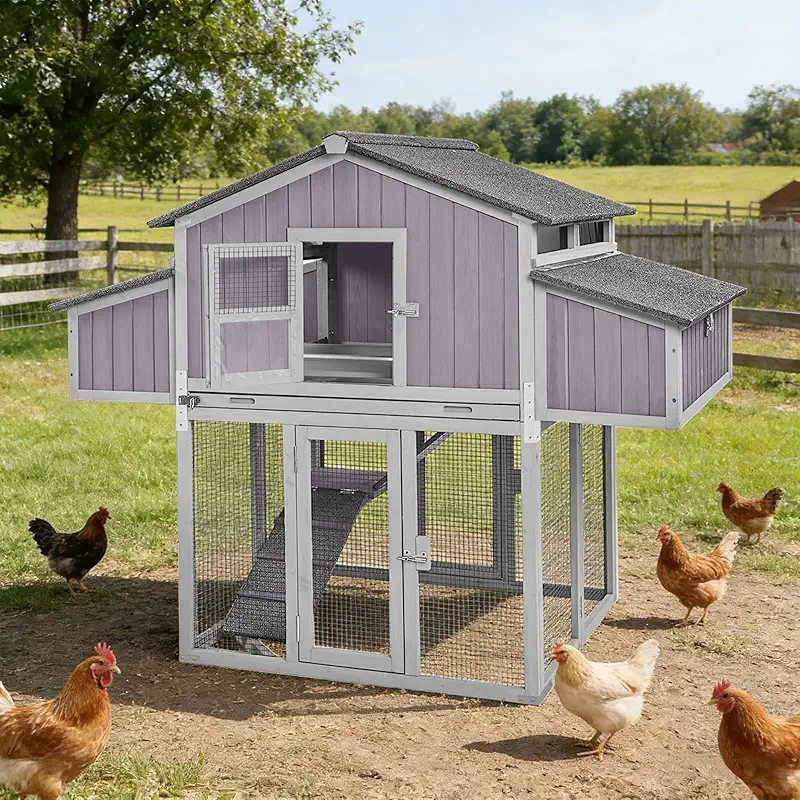
Walk-in run with elevated house
My knees like this style. You get a raised coop with space underneath and a tall run you can
almost walk into. Cleaning, feeding, and checking hens is a lot easier when you do not have to crawl.
Nice choice for folks planning to keep 5–8 hens and who want room to tinker and add extras.
Mobile “tractor” coop with run
These are light enough to drag a few feet each day, letting birds graze fresh grass while fertilizing
the yard. I used one in the orchard, and the hens handled more bugs than any spray ever did.
Best for 2–4 birds, or as a second coop for meat birds or quarantine.
Setting up your prefab chicken coop with run the right way
A prefab coop may come out of the box ready to assemble, but there are a few farm-tested tricks that make
the difference between “that will do” and “this works great.” Give yourself a calm afternoon, a charged
drill, and maybe a thermos of coffee. Or something stronger once the roof is on.
Choose the best spot in your yard
Hens do not care about pretty views, but they do care about breeze, sun, and mud. I like to place a prefab
chicken coop with run where:
Morning sun hits the coop to dry off any dampness.
Afternoon shade keeps birds from baking in summer.
The ground is slightly higher so rainwater runs away, not into the run.
I can see the coop from the house window, so I notice trouble fast.
Level the ground and add bedding
Before assembling, I like to rough-level the area with a shovel. Does not have to be perfect, just not
rocking side to side. Inside the coop, I spread a good layer of dry pine shavings. In the run, I use
old leaves, wood chips, or chopped straw. The hens mix it all up into a nice compost while they scratch.
My “no mud” trick
In wet seasons, I toss in a wheelbarrow of rough wood chips into the run every couple of weeks.
It keeps the ground from turning into a swamp, and the birds stay busy hunting bugs and bits.
Upgrade hardware where it matters
Many prefab coops come with small screws and basic latches. They work, but I like to sleep better than that.
I usually:
Add barrel bolts or carabiners on doors and nest box lids.
Swap flimsy hinges for heavier ones on the main coop door.
Run an extra strip of screws along long boards for strength.
A few dollars in better hardware is cheap insurance when you hear coyotes singing at 2 a.m.
Keeping hens happy and productive in a prefab coop with run
Once your birds move into their prefab chicken coop with run, the real fun starts. Chickens are simple
creatures, but they are honest. If something is wrong, they tell you with noise, bare spots, or trouble
laying. If things are right, they cluck softly, scratch around, and give you steady eggs.
Ventilation without drafts
Think of fresh air as your best disease prevention. Warm, moist air from breathing and droppings has to go
somewhere. A good coop has vents high on the walls or under the eaves, so stale air escapes above the birds’
heads while they roost. In colder weather, I hang an old feed sack or piece of tarp where wind sneaks in
lower down, but I never block the top vents completely.
Light, feed, and water
I hang the feeder inside the coop or under the covered part of the run, high enough that the smallest hen
can reach but the tallest bird cannot scratch bedding into it. Same for the waterer. In winter, I use a
simple heated base to keep water from freezing; thawing buckets three times a day lost its charm years ago.
As for light, hens need around 14 hours to lay well. Out here, I let nature run the show. Eggs slow down
in winter, and that is fine with me. If you want more winter eggs, you can add a small light on a timer in
the morning, but do not blast them all night like a gas station.
Routine that keeps things simple
My daily rhythm with a prefab chicken coop with run looks like this:
Morning: open pop door, quick check on feed, water, and general hen gossip.
Late afternoon: collect eggs, peek in corners for any signs of dampness or drafts.
Weekly: rake or stir bedding, top off nesting material, quick inspection of latches and wire.
Seasonally: deep clean coop, replace bedding, look over the whole structure for repairs.
A few steady, small habits beat one giant, miserable clean-out day every time.
Examples of prefab chicken coop with run setups that work
Let me give you a few real-world setups I have seen work well for friends, neighbors, and my own flock.
These are the kinds of arrangements that make chores easy and hens content.
Backyard family flock (4 hens)
My neighbor up the road keeps four mixed-breed hens in a modest prefab coop and run tucked beside
their garden. The kids gather eggs each afternoon, and the birds get supervised time in the yard
on weekends. Simple, tidy, and no one has to wrestle with lumber.
Orchard pest patrol (6 hens)
I used an elevated coop with a long run in my small apple orchard. The hens spent their days
scratching around fallen fruit, breaking pest cycles and fertilizing as they went. A prefab setup
made it easy to move the whole thing between rows every couple of weeks.
Suburban side-yard flock (3 hens)
A friend in town keeps three quiet, polite hens in a small prefab chicken coop with run along the
fence line. They added a bit of lattice to keep things tidy-looking, and the neighbors mostly just
notice the fresh eggs that show up on their porch.
Starter coop for new keepers
For first-timers, a medium prefab coop and run is a gentle way to learn. You figure out feed, health,
and routine before you ever touch a saw. Later on, if the “chicken bug” bites hard, you can always
add a bigger setup and keep the prefab as a grow-out or quarantine coop.
FAQs about choosing a prefab chicken coop with run
How many chickens can I keep in a prefab chicken coop with run?
Ignore the big number on the box and do your own math. Aim for at least 4 square feet per bird inside
the coop and 8–10 square feet per bird in the run. So if the indoor part is about 16 square feet and
the run is 40 square feet, that is comfortable for 3–4 hens. You can squeeze more, but your birds will
be calmer and healthier if you give them some breathing room.
Are prefab chicken coops with runs safe from predators?
They can be, with a few smart upgrades. The better ones start with solid frames and tight wire.
I always add stronger latches, maybe an extra lock on the pop door, and hardware cloth around the lower
part of the run if the wire feels light. If you have digging predators, consider adding a wire apron on
the ground around the run. Think like a hungry raccoon, and you will see where to improve things.
Do I need to let my hens free-range if I have a run?
A good prefab chicken coop with run gives hens enough space to stay healthy without full free-range.
That said, supervised yard time is like a bonus vacation for them. If your schedule or neighborhood
does not allow free-range, do not feel guilty. Just keep the run dry, add interesting bedding like
leaves or chips, and toss in veggie scraps or a flake of hay for them to pick through.
How long will a prefab coop with run last?
With basic care, many prefab coops last several years, sometimes longer. The big enemies are standing
water, constant mud, and never doing repairs. I like to reseal wood every year or two if it starts to
look tired, tighten loose screws, and keep the run from turning into a swamp. Treat it like a little
barn, not a throwaway toy, and it will serve you well.
Is a prefab chicken coop with run okay for cold or hot climates?
Most prefab coops are built for mild to moderate climates, but with a few tweaks they work in both
cold and heat. In cold areas, focus on blocking drafts at bird level while keeping vents open up high.
Deep, dry bedding helps a lot. In hot areas, shade is king. Place the coop where it catches morning sun
and afternoon shade, and make sure the run has good airflow. I have kept hens through snow and heat
waves in prefab setups; the key is paying attention and adjusting with the seasons.
If you are ready to stop sketching coops on scrap paper and start collecting eggs, a solid prefab chicken
coop with run can make that first step a whole lot easier. Your hens do not care if you built it from
reclaimed barn wood or it came in a box; they just want dry feet, safe nights, and a little room to scratch.