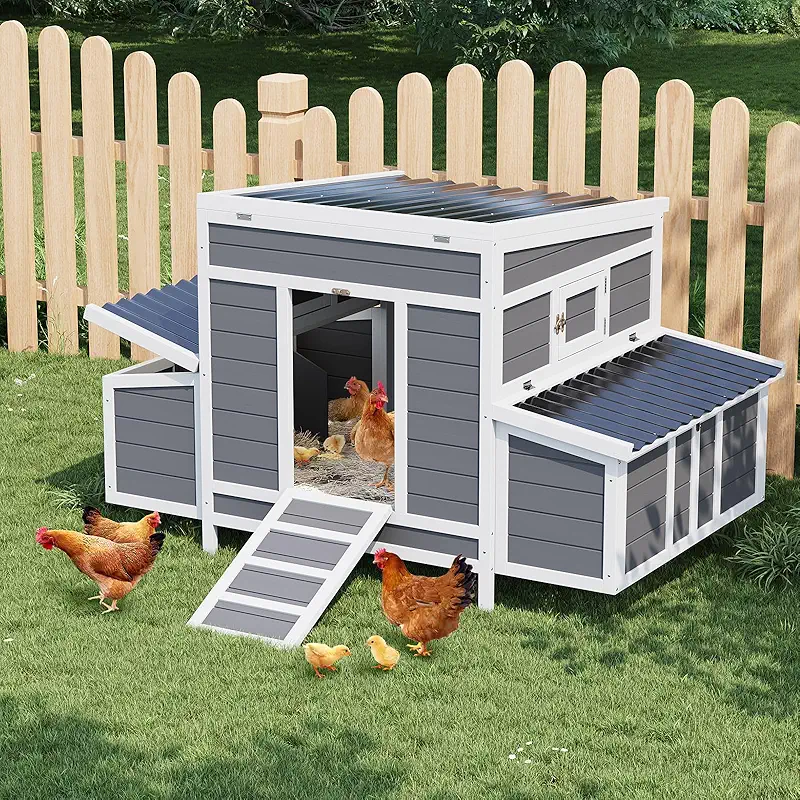
large prefab chicken coops
large prefab chicken coops
I’ve raised hens through blizzards, heat waves, and more mud seasons than I care to count. Over the years, large prefab chicken coops have quietly become one of my favorite “cheats” for getting birds settled fast, safe, and laying steady.
On this page I’ll walk you through how I think about big prefab coops on a real working homestead: what actually matters, what’s just fancy paint, and how to set them up so your birds are happy and you’re not out there every night chasing hens with a flashlight.
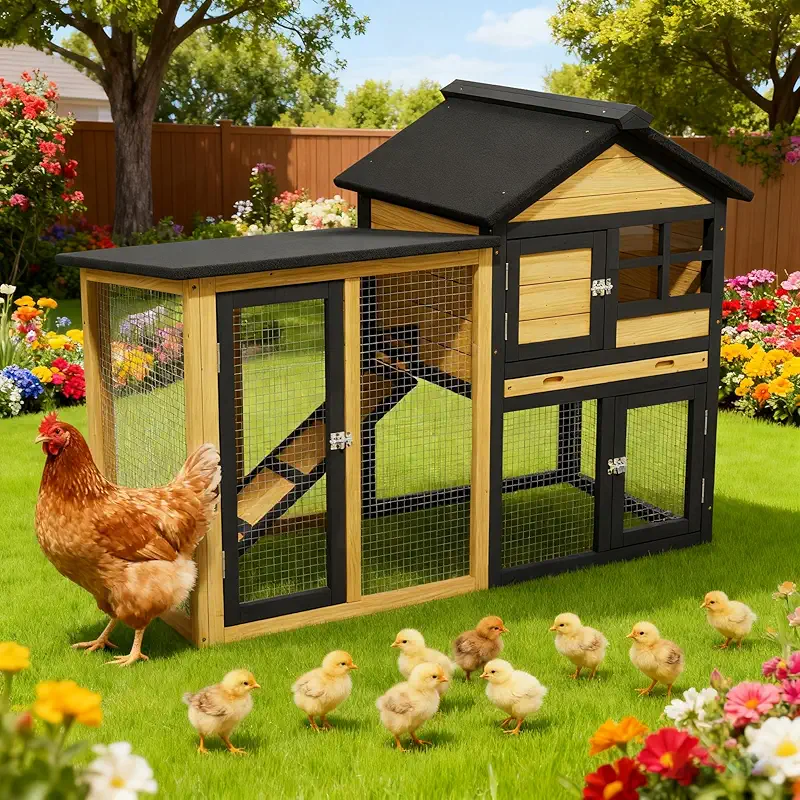
Why large prefab chicken coops make sense for busy folks
I grew up in a world where “real” farmers built everything from scratch. Barns, brooders, nesting boxes – if you suggested buying something prefab, you got a look like you just said you were switching to store-bought eggs. Then one spring, after a winter that beat my knees up pretty good, I dragged home my first large prefab coop.
I’ll be honest with you: I felt a little guilty, like I was cheating on my toolbox. But within a week, my hens were settled, I was sleeping better, and my back wasn’t screaming at me every time I bent over. That’s when I decided there’s nothing wrong with letting the coop show up in a box while you save your energy for the birds themselves.
Large prefab chicken coops shine when you:
- Need room for a growing flock but don’t have weeks to build
- Want something that looks tidy in the yard, not like a pile of pallets
- Prefer a plan that already works, instead of guessing roost height and nest size
- Live where winters or predators are no joke, and you need solid protection fast
Old farmer confession
These days I still build a few things from scratch, but my “instant coop in a crate” is what gets the new pullets housed on time. Pride is nice. Dry hens are better.
How big should a large prefab coop really be?
The word “large” gets thrown around pretty loose. I’ve seen boxes that say “up to 10 chickens” where I wouldn’t put more than 4 of my big girls unless they signed a roommate agreement first.
Here’s the sizing rule I use on my farm, and it hasn’t failed me yet:
- Inside coop space: 4 square feet per bird for standard breeds
- Outside run space: 8–10 square feet per bird if they’re confined most of the day
- Roost space: about 8–10 inches of perch per hen
- Nesting boxes: one box for every 3–4 hens
So if you’re planning on 10 hens, a “true” large prefab chicken coop should offer something like:
- At least 40 square feet inside
- At least 80 square feet in the run, unless they free-range daily
- 3–4 nesting boxes that are easy to reach and clean
What I look for on the label
When I see a prefab coop that claims “8–10 chickens,” I don’t take that at face value. I look for the actual measurements, not the marketing number. If you see something like “Coop: 6 ft x 4 ft, Run: 10 ft x 4 ft”, the math is simple:
- Coop: 24 sq ft → comfortable for 5–6 hens inside
- Run: 40 sq ft → nice for 4–5 hens if they’re fenced in most of the time
That might still be “large” if you’re only running a small backyard flock, but now you know what you’re really getting into. Crowded birds get cranky. Cranky birds peck. Pecked birds stop laying.
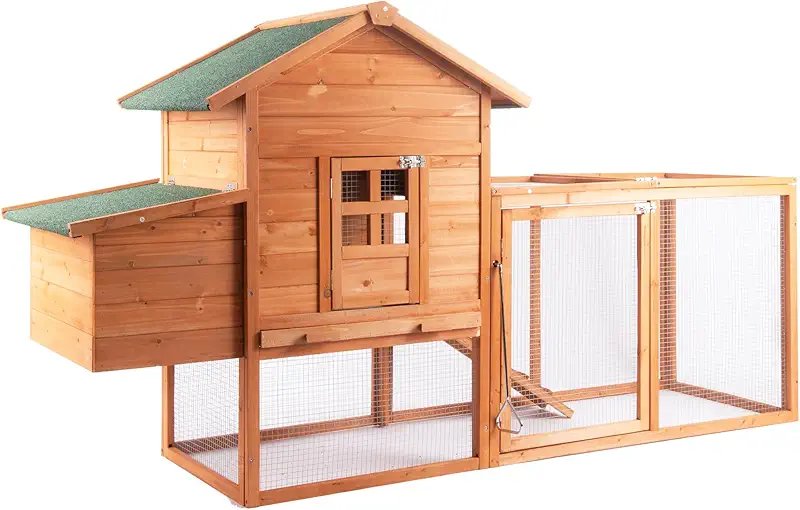
A roomy coop and run setup means calmer hens, cleaner bedding, and less trouble for you at chore time.
Key features that matter in large prefab chicken coops
Once you’ve checked the size, the next question is, “Will this thing hold up to real farm life?” I’ve seen pretty coops fold under a good wind, and I’ve seen simple ones last longer than my old pickup.
1. Solid frame and flooring
A large prefab coop doesn’t have to be fancy, but it must be sturdy. I like:
- Frames that don’t wobble when you give them a good shake
- Floors that sit off the ground a bit to stay dry
- Hardware that doesn’t bend like soft wire when you tighten it
If the coop has a raised floor, that’s a bonus. Keeps dampness away and gives the birds a dry place when the yard turns to soup in spring.
2. Ventilation without drafts
My grandfather used to say, “Chickens handle cold better than a draft.” He was right. A large prefab coop should have good air flow up high, but no direct wind blowing across the roosts.
- Look for vents or windows up near the roofline
- Make sure openings can be closed or covered with hardware cloth
- Avoid big gaps at bird level, especially where they sleep
3. Easy cleaning access
This one right here separates the coops I like from the ones I curse at. When a coop is big and tight, but you have to crawl in like a raccoon to clean it, you’ll dread the chore. And when you dread it, you delay it. And when you delay it, well, let’s just say your nose and your birds pay the price.
- Large doors you can open standing up (or close to it)
- Removable trays or dropping boards under the roosts
- Nesting boxes that open from the outside
4. Predator protection
I don’t care if your biggest predator so far is the neighbor’s nosy dachshund. Once word gets out that you keep hens, something hungry will come knocking. With large prefab chicken coops, I always upgrade the weak spots.
- Wire: Prefer 1/2" hardware cloth over cheap chicken wire
- Latches: Real metal latches, not flimsy hook-and-eye only
- Skirt: Hardware cloth buried or flared out to stop diggers
Field trick from many midnight raids
I run a band of hardware cloth around the lower 18–24 inches of my prefab runs, even if the coop already has wire. Raccoons have little hands and too much free time at night.
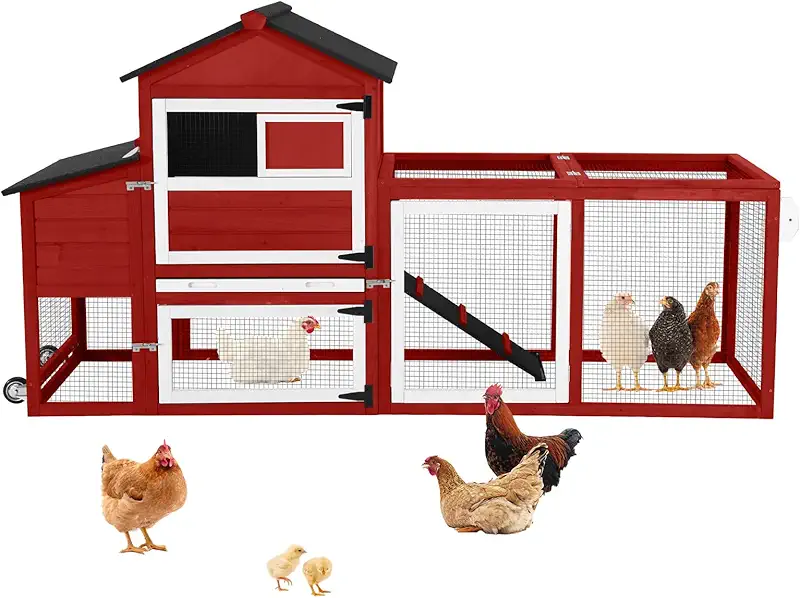
Strong wire, tight latches, and a dig-proof edge keep your large prefab coop from becoming a late-night buffet.
Comparing large prefab chicken coops to DIY builds
I’ve built coops out of fresh lumber, scrap wood, an old horse trailer, and once out of a shed that should’ve been retired two owners back. I’ve also put together more than a few prefab kits. They both have their place.
| Aspect | Large prefab coop | DIY build |
|---|---|---|
| Time to use | Often ready in a weekend or less | Can take several weekends or more |
| Tools needed | Basic hand tools; follows a plan | Full tool set; design and problem-solving |
| Design | Tested layout with roosts, nests, doors | Anything you can dream (or mess up) |
For first-time keepers, I usually nudge folks toward large prefab chicken coops. You get a straightforward start, and you learn what you like and don’t like while the birds are already settled and laying. Later on, if the chicken bug really bites you, build your dream palace.
Setting up your large prefab coop the right way
The coop you pick matters, but where and how you set it up matters just as much. I’ve seen good coops turned miserable by a bad spot in the yard. Here’s how I think it through when I roll a new coop off the truck.
Pick the right spot
- High and dry: Avoid low spots where water puddles
- Some shade: A tree or shade in the afternoon helps in summer
- Close enough: Not so far that winter checks feel like an expedition
- Neighbor-friendly: Keep it tidy and downwind if you can
Prepare the ground
With large prefab chicken coops, I like to think about the ground like a foundation. Doesn’t need to be perfect, but it should be firm and mostly level.
- Scrape off sod or deep bumps where the frame will sit
- Add a layer of gravel under the run in muddy areas
- Consider pavers, blocks, or skids under the coop itself
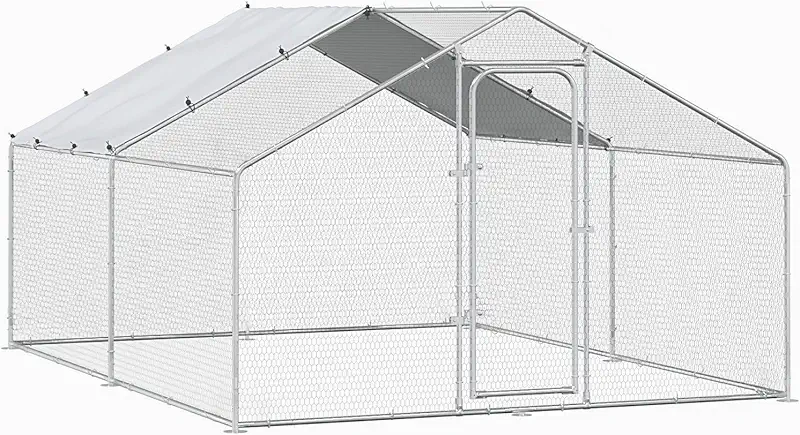
Inside setup for happy layers
Once the walls are up, I set the inside up the same way every time:
- Dry bedding on the floor (pine shavings are my favorite)
- Roosts higher than the nesting boxes, so hens sleep on the roost, not in the nests
- Nesting boxes lined with clean straw or shavings
- Feeders and waterers just high enough to keep litter out
Do it right once, and your daily chores get simple: feed, water, gather eggs, quick check, then enjoy that second cup of coffee.
Keeping large prefab chicken coops clean and low-maintenance
I like my mornings steady. Coffee. Check the sky. Head out to the birds. A coop that stays fairly clean and easy to handle makes that routine peaceful instead of a wrestling match with muck and smell.
My simple cleaning routine
Here’s what I do with my big prefab coops:
- Every day: Quick check, scoop obvious messes under the roosts, top off feed and water
- Once a week: Stir bedding, add a fresh layer on top, wipe perches where needed
- Every month or so: Strip out bedding completely and start fresh
With a good-sized coop and decent ventilation, the smell stays mild, and the birds stay healthier.
Deep litter, done sensibly
In larger prefab coops, I sometimes use a deep-litter style in winter: keep adding clean shavings, let the bottom slowly break down. It gives a little warmth and saves hauling frozen muck when the driveway is pure ice. Just don’t let it get wet or packed hard.
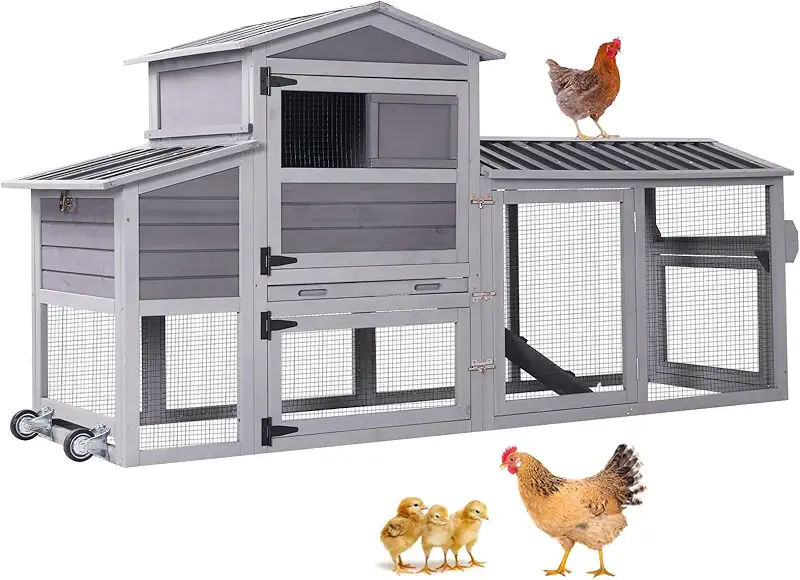
Bigger coops with thoughtful layouts turn cleaning into a quick, simple job instead of an all-morning project.
How large prefab chicken coops help your egg basket
Happy hens lay better, plain and simple. When your coop gives them space, safety, and a calm routine, your carton tells the story. Here’s how a good large prefab coop plays into that.
Less stress, more eggs
- Room to move without getting picked on
- Safe, dark nesting boxes where hens feel hidden
- Consistent roost spots and feed access for all birds
I’ve seen flocks double their laying just by moving from a cramped old shed into a larger, better-shaped coop. Same birds, same feed – new living room.
Weather protection
Large prefab chicken coops usually have nicer rooflines and better door setups than the slap-together jobs. That means:
- Less wind screaming through in winter
- Shaded corners in summer for birds to cool off
- Dry bedding that doesn’t mildew and stink
You keep that environment steady and your girls will thank you with a steady basket.
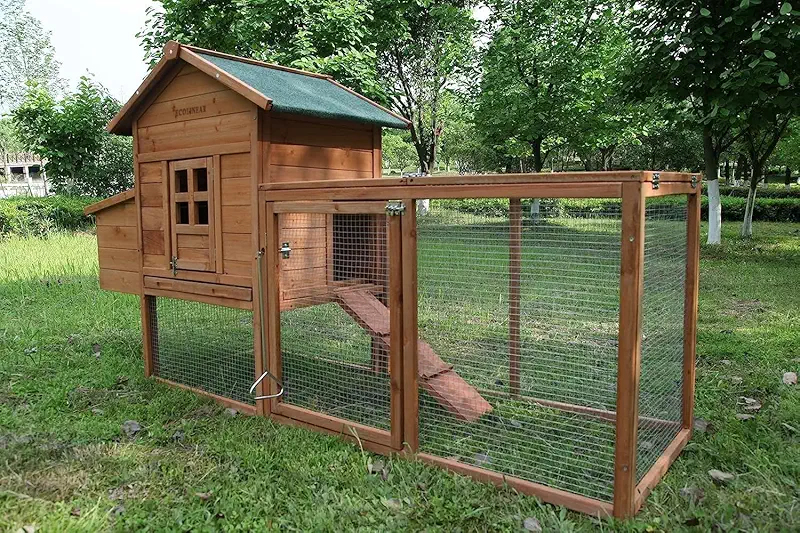
One season that sold me
Years back, I moved a mixed flock of older hens from a drafty, patchwork coop into a brand-new large prefab setup. I figured their laying days were mostly behind them. Turns out, with better light, less draft, and dry nests, those “old ladies” gave me a strong season yet. Sometimes the coop is the real problem, not the birds.
FAQ about large prefab chicken coops
How many chickens can I keep in a large prefab chicken coop?
Ignore the big bold number on the box for a moment and check the actual measurements. Aim for about 4 square feet per hen inside and 8–10 square feet per hen in the run if they stay confined most of the day. If the coop is listed for 10 birds but the math only supports 6, trust the math. Your birds will be calmer and healthier with a little elbow room.
Are prefab coops strong enough for cold winters and heavy snow?
Many large prefab chicken coops do just fine in winter with a bit of farmer common sense. Put the coop where the wind is gentler, make sure roof panels are screwed down tight, and keep ventilation up high so moist air can escape. In heavy snow country, I like to sweep deep snow off the roof after storms and sometimes add a brace or two inside for peace of mind.
Do I still need to add predator protection to a prefab coop?
I always do. Even sturdy prefab coops can ship with thinner wire or simple latches. I like to upgrade to hardware cloth around the run, add extra latches where doors meet, and sometimes bury a wire skirt around the outside to stop diggers. It doesn’t take long, and it’s cheaper than replacing birds after one determined raccoon visit.
Is a large prefab coop okay for free-range hens?
Yes. For free-range flocks, the coop is more like their bedroom and breakfast nook. They just need enough space to roost comfortably at night, safe nesting spots, and a place to duck into during storms. In that case, you can lean more on the 4 square feet per bird inside and be flexible on the run size, since they’re out roaming most days anyway.
How long do large prefab chicken coops usually last?
That depends on materials, weather, and how you treat them. I’ve had prefab coops last 6–8 years with regular touch-ups: a coat of exterior paint, tightening hardware, replacing a board here and there. Keeping the base dry and off bare mud makes a big difference. Think of the coop like a little barn: give it a bit of yearly care, and it’ll keep your hens sheltered for a good run.
A few closing thoughts from an old farm hand
Folks sometimes expect a deep, mystical secret about chickens. Truth is, they just need the basics done well: space, safety, clean air, dry feet, and a place to lay in peace. Large prefab chicken coops make it easier to get those basics right without turning your whole summer into a construction project.
If you’re standing there wondering whether you “should” build from scratch to be a proper homesteader, let me offer you this: your birds don’t care if the coop arrived in a box or in the back of a pickup. They care that it’s dry tonight, safe from paws and claws, and that you show up with feed and a kind word.
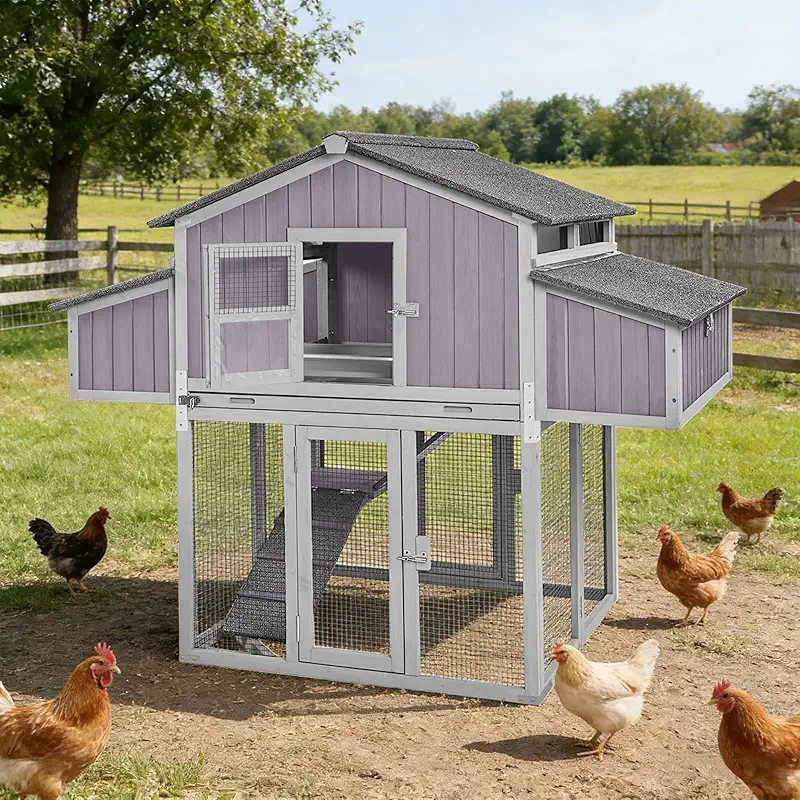
Over the years, I’ve learned to save my back, save my time, and put that energy into better feed, cleaner water, and watching the flock instead of chasing problems. A well-chosen prefab coop fits that mindset just fine.
However you go about it, I hope you end up with hens that come running when they see you, a nest full of warm eggs, and a coop that makes your chores feel like a pleasure instead of a burden. That’s good farming in my book.
If you’d like to look over more options and see what kind of large prefab chicken coops might fit your yard and your flock, wander through the different styles and sizes and picture your birds scratching around in there.