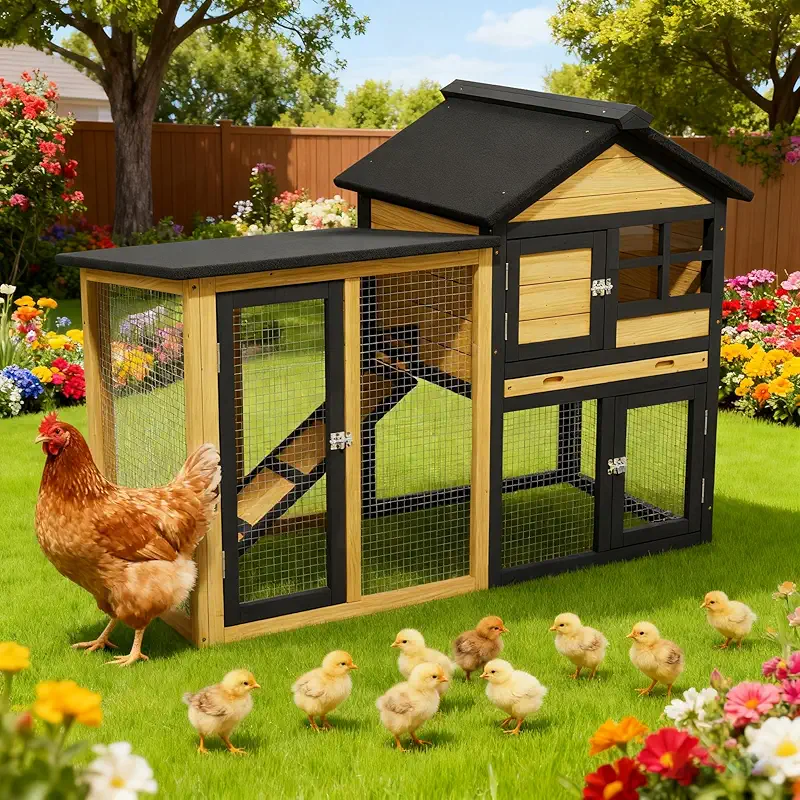
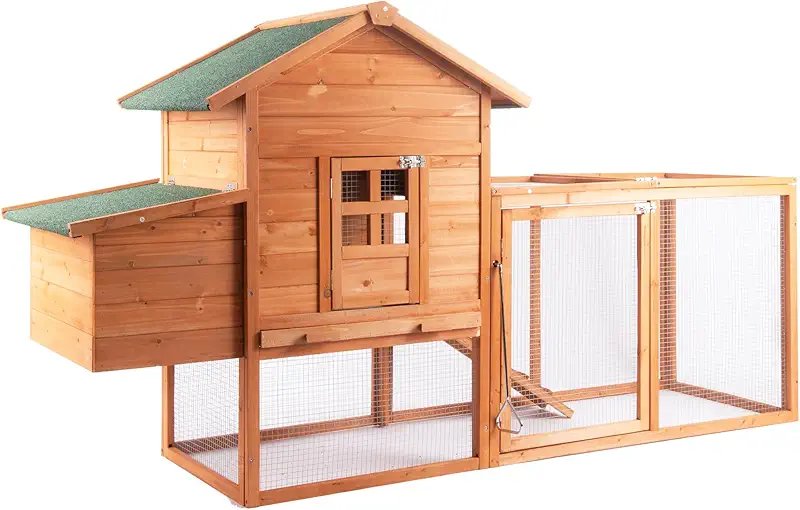
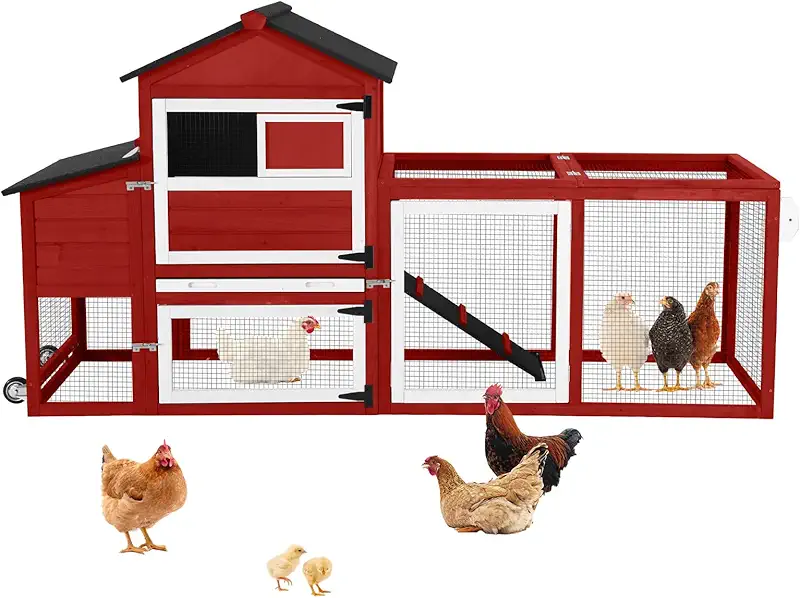
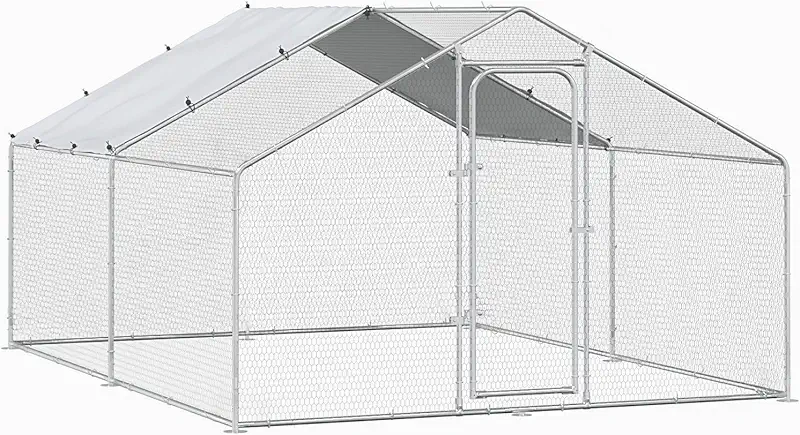
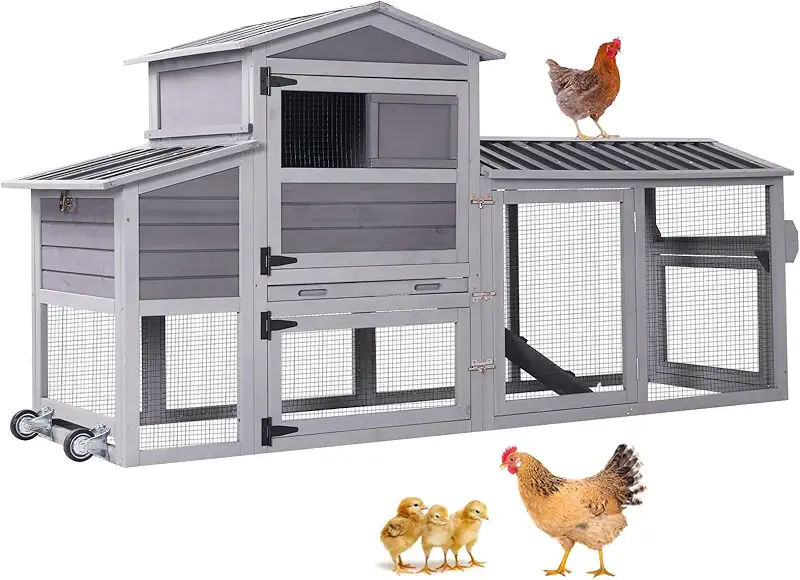
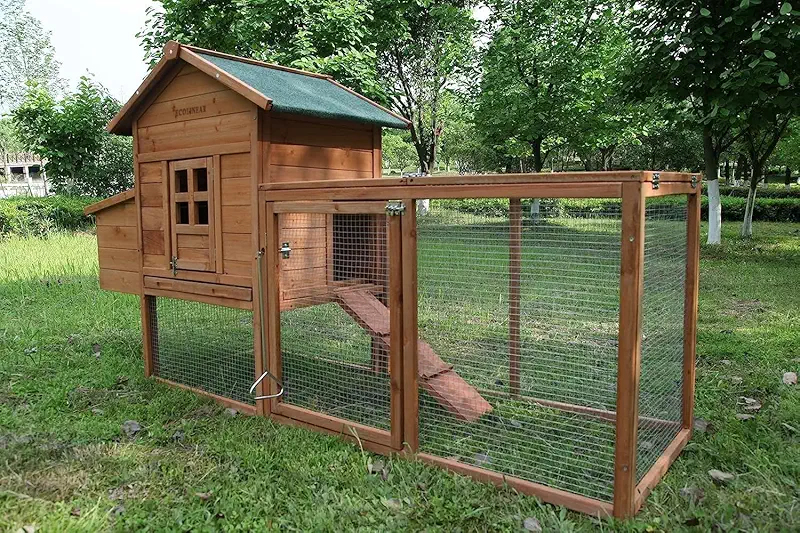
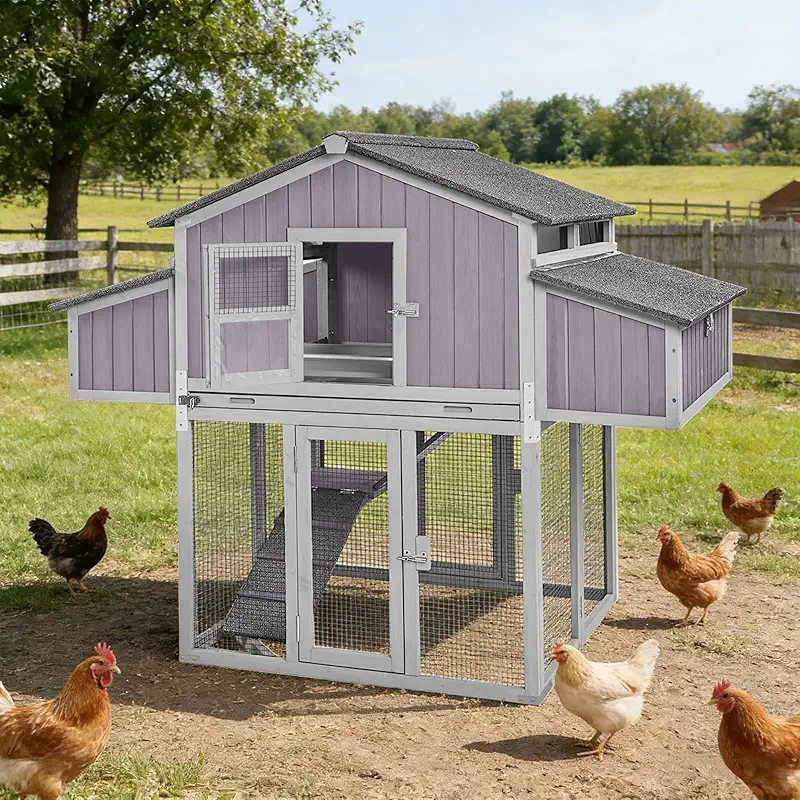
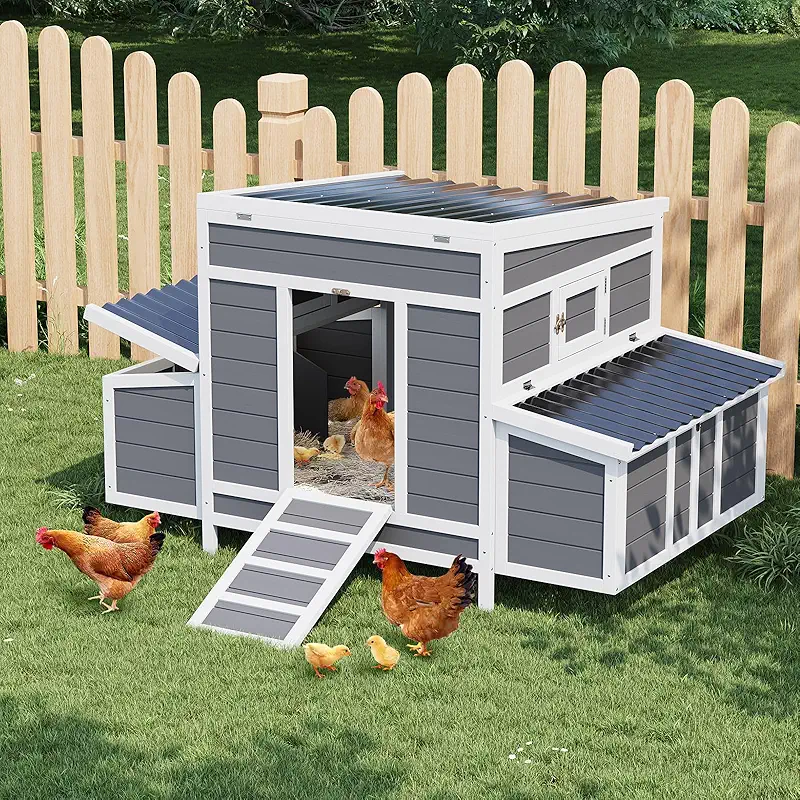
How many hens fit in cheap chicken coops?
I’ve seen more arguments about space per hen than I’ve seen roosters that know when to quit crowing. Here’s how I size cheap chicken coops in the real world, not in a perfect magazine picture.
For standard laying hens, I like to give:
- 4 square feet per hen inside the coop (minimum).
- 8–10 square feet per hen in the run, more if possible.
- 10–12 inches of roost space per hen.
- 1 nesting box for every 3–4 hens.
Many cheap chicken coops claim they hold “6–8 chickens” when, in my honest farmer opinion, they’re comfortable for 3 or 4. The marketing people must have never watched a group of hens argue over bedtime.
Farmer tip: When you look at coop descriptions, cut the claimed capacity in half for full‑sized hens. That’s usually closer to the truth.
Crowded birds get cranky, peck each other, and slow down on laying. A slightly bigger cheap coop with plain looks will beat a tiny “cute” one every single time.
One year I tried stuffing too many pullets into a small discount coop I was “sure” would be fine. Next morning, one hen had taken over the best nest box, and the others were yelling at me like I’d sold their beds. I moved half to another coop that same day and the coop went from drama club to calm again.
What I always upgrade on every cheap coop
Even the better cheap chicken coops usually need a little tune‑up. Think of them like a used pickup: good bones, but you’re still going to put your own tools in the back.
1. Stronger locks & latches
Raccoons here can open simple slide latches like they’re reading the Sunday paper. On every budget coop, I add:
- Carabiners or snap clips on all latches.
- Extra latch on main coop door and egg box lids.
- Sometimes a hasp and padlock if I know raccoons are bold.
It’s a cheap fix that can save your whole flock in one night.
2. Better wire
If a coop comes with thin chicken wire, I treat it like a suggestion, not a solution. I prefer ½‑inch hardware cloth. I’ve watched raccoons rip right through regular chicken wire, and once is enough to learn that lesson.
3. Extra weather protection
Many cheap chicken coops use thin boards and light roofing. They’re fine until that first sideways rain or heavy snow. I usually:
- Run a bead of exterior sealant along roof joints.
- Add a small roof overhang on the windward side.
- Throw a simple tarp or panel over runs in winter for wind break.
4. Real roosts
Some budget coops come with skinny round perches or odd plastic bars. Chickens prefer a flat, wide surface where they can rest their toes. A 2x3 or 2x4 board, wide‑side up, works just fine.
About an afternoon of simple upgrades can turn a cheap chicken coop into something I’d trust in a decent storm. And I’d rather spend that time once than spend money I don’t have on something fancier.
Keeping hens happy in a cheap coop
Hens don’t care about brand names. They care about feeling safe, staying dry, and having enough space to do chicken things: scratching, dust bathing, gossiping about the rooster. Even if your coop is on the cheap side, you can keep your flock content with a few simple habits.
Give them a steady routine
Chickens like knowing when the door opens, when the feed shows up, and when the lights go out. Even a budget coop feels like home when mornings and evenings are calm and predictable. I open my coops at roughly the same time every day, and the hens line up like they own the place. Which, in a way, they do.
Use good bedding, even in a cheap coop
I like dry pine shavings or chopped straw. Fancy brand isn’t the point; dry and clean is. In a thin‑walled cheap coop, bedding does double duty: keeps droppings covered and adds a bit of insulation.
I use the deep litter method in some of my cheaper coops: add fresh shavings on top, stir it now and then, and clean out fully when it’s time for the garden. The coop stays warmer in winter and doesn’t smell if you stay on top of it.
Fresh air without drafts
People worry more about cold than they should and not enough about damp. Chickens handle dry cold better than wet, stuffy air. Even in a cheap chicken coop, you can:
- Add vents up high, away from roost level.
- Cover vents with hardware cloth to keep critters out.
- Point vents away from the direction of the worst wind.
I like a vent at the top of the coop front and another at the back. Warm, moist air rises and slips out, and fresh air sneaks in without blasting the hens at roost.
Winter and summer care for cheap chicken coops
A cheap coop can ride out the seasons just fine if you help it along. Weather hits thin‑walled coops harder, so a little planning goes a long way.
Winter with cheap chicken coops
I’ve overwintered birds in some pretty humble setups. Here’s what I focus on:
-
Block wind, not air. I cover the run on the windward side with plastic or boards but leave the coop vents open up high.
-
Dry floor, dry birds. I add extra shavings and rake out wet spots right away.
-
Roost height. Hens like to roost high, but in a cold cheap coop I keep roosts low enough that rising warm air still covers them.
I rarely use heat in coops, even cheap ones. Good ventilation, bedding, and draft protection are usually enough unless you live where winter bites hard for months on end.
Summer in a small or cheap coop
Heat can be tougher on hens than cold. In summer I:
- Open everything that can safely be opened for airflow.
- Give extra shade over the run with a tarp or old sheet.
- Move portable coops so they don’t sit in full sun all day.
- Keep water in the shade and refresh it often.
I’ve dragged small, cheap chicken coops across the yard more times than I can count, chasing afternoon shade. The birds follow that shadow like it’s paying rent.
My personal pros and cons of cheap chicken coops
After years of trying different cheap setups, here’s how I see it, straight from the chicken yard.
What I like about cheap coops
- Low risk. You can start with a small flock without spending the feed bill for half the year.
- Easy to move or replace. If it doesn’t work out, you’re not stuck with a huge building.
- Good training wheels. You learn what you actually need before committing to a big permanent coop.
What you need to watch out for
- Optimistic capacity claims. Always plan for fewer birds than the box says.
- Thin materials. Expect to reinforce joints, add screws, and weatherproof.
- Shorter lifespan. Even a well‑cared‑for cheap coop won’t last like a solid homemade barn.
I treat budget coops as part of my learning and growing. Start cheap, learn what your birds and your land are like, and later on, if you want, you can build or buy that dream coop with real‑world experience under your belt.
Cheap chicken coops – common questions I hear in the yard
1. Are cheap chicken coops safe from predators?
They can be, but not straight out of the box in many cases. The structure is usually fine, but latches, hinges, and wire are where corners get cut. With better hardware cloth, stronger latches, and a quick walk‑around to seal gaps, a cheap coop can stand up well to raccoons, possums, and neighborhood dogs. Without those upgrades, you’re rolling the dice.
2. How long will a cheap coop last?
On my place, most cheap chicken coops last around 3–5 years if I keep them painted, sealed, and off the wet ground. Some have gone longer with repairs. If you leave raw wood in the mud and never tighten screws, they’ll fall apart much sooner. Think of them as “several good seasons” rather than “forever buildings.”
3. Can I use a cheap coop for winter eggs?
Yes, if you make sure the birds stay dry, out of drafts, and well‑ventilated. I’ve collected plenty of winter eggs from hens housed in simple, cheap chicken coops. Add bedding, block wind around the run, and keep water thawed. Light and breed matter more for winter laying than how fancy the coop is.
4. Is it better to build my own than buy a cheap coop?
If you’ve got tools, time, and decent lumber prices, building can give you a stronger coop for the money. But not everyone has all three. Cheap coops are handy for folks who want to start right away, or who don’t want to turn every weekend into a building project. I’ve done both, and both can work fine when you’re honest about what you’ll really finish.
5. How do I know which cheap coop is right for my flock?
Start with flock size and climate. Count your hens as they’ll be next year, not just today. Then pick a coop where, after you cut the advertised capacity in half, it still works. Look at roof design for your weather, run size for how often they’ll be confined, and how easy it will be to reach in and clean. If you can picture yourself cleaning it on a rainy Tuesday after work without swearing too much, you’re on the right track.
Ready to look over some cheap chicken coops?
If you’ve read this far, you’re already ahead of most folks who just grab the cutest little coop picture they see and hope for the best. You know what to check, where to be picky, and where you can keep things simple.
When I choose cheap chicken coops these days, I ignore the big promises on the front of the box and look at the quiet details: roof angle, door size, how the corners meet, where I can add a latch, how easy it’ll be to clean. The pictures might sell it, but the small things make it livable.
Walk through your own daily routine in your mind: opening the coop, feeding, checking eggs, cleaning. If you can see yourself doing all that easily with a given coop, you’re close to the right choice, no matter what the price tag says.
Out here, every dollar works hard. So does every hen. The trick is finding that steady middle ground where your wallet isn’t empty and your flock still struts around like they own a fancy hotel. A well‑chosen cheap coop can do that, and your birds won’t complain one bit—as long as the feed keeps coming and the coop feels safe.
If your hens could talk, they’d probably nudge you with a wing and say, “Let’s at least peek at what’s out there.”
I’ll browse coops now