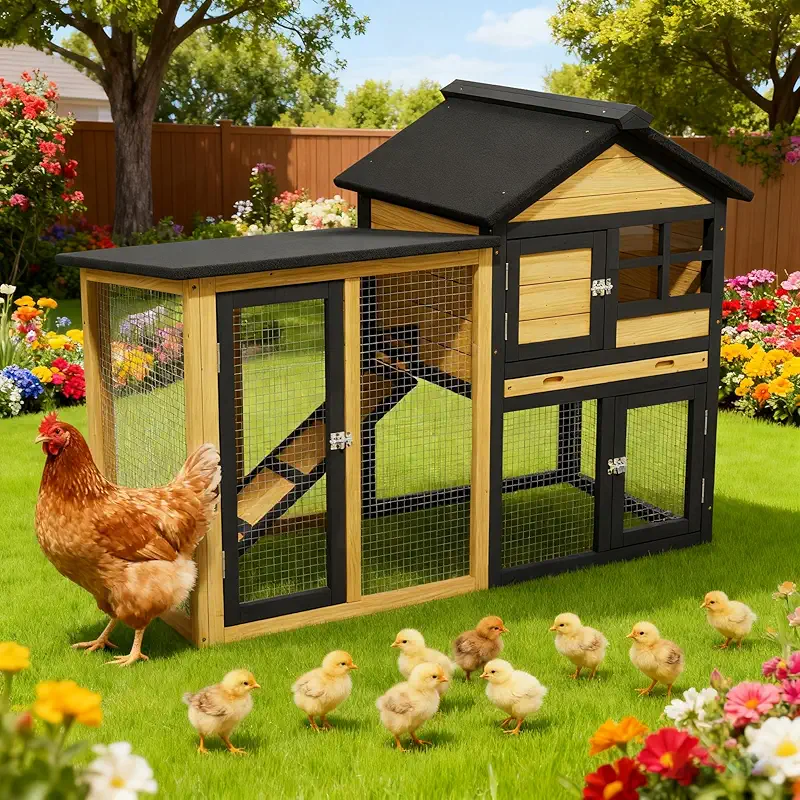
Farmer’s plain-talk guide
cheap chicken coops for sale near me
cheap chicken coops for sale near me
cheap chicken coops for sale near me is something every backyard farmer types in at some point.
I’ve been raising laying hens for a few decades now, and I’ve learned this the hard way: a low price is nice,
but a cold, drafty coop will cost you more in sick birds and lost eggs than you ever saved.
In this page I’ll talk to you like I would to a neighbor leaning on my fence: how to pick a cheap coop that still keeps hens warm, dry, and laying strong,
which corners you can safely cut, and which ones bite you later. We’ll keep it simple, honest, and a little bit funny—because chickens are funny,
and farming without a laugh is just hard work.
What “cheap” really means when you’re buying a coop
When folks ask me about cheap chicken coops for sale near me, I always ask back,
“Do you want cheap today, or cheap over the next five years?” Because on a farm,
the cheapest thing is usually the one you only need to buy once.
I’ve built coops out of scrap pallets, old barn doors, and once out of an ice fishing shack I got for a handshake and a promise.
Some of those ideas were smart. Some… well, let’s just say the hens were more forgiving than my wife.
A good “cheap” coop does three jobs well:
- Keeps your birds dry when the sky opens up.
- Keeps wind off their backs in winter and gives shade in summer.
- Keeps predators out and the hens in.
If a coop can do those three things, we can work around the rest with a screw gun, a bit of wire, and a Saturday afternoon.
Farmer tip
When you look at a coop price, add in three years of egg money in your head.
If it falls apart long before those three years, you didn’t get a bargain, you just bought trouble on sale.
How many chickens, how much space?
Before you start hunting cheap chicken coops for sale near me, you’ve got to be honest about how many birds you really want.
I’ve never met a chicken keeper who said, “I wish I’d built it smaller.” Hens have a way of multiplying, kind of like potato chips.
As a rule of thumb that’s served me well:
- Inside the coop: 3–4 square feet per hen.
- Outside run: 8–10 square feet per hen is comfortable.
- Roost space: about 8–10 inches of perch per hen.
- Nesting boxes: one box for every 3–4 hens.
You’ll see a lot of small, cute coops sold as “for 6–8 hens” that are really only comfy for about 3 hens that actually like each other.
Hens packed too tight start picking on each other, and that’s when the trouble starts: broken feathers, bloody combs, and fewer eggs.
If you’re not sure how big to go, I’d say buy for the number of hens you think you’ll have in two years, not the number you have today.
Most of us start with 4 and end up with 10 before the first winter is over.
Types of cheap chicken coops you’ll find near you
When you search cheap chicken coops for sale near me, you’ll bump into the same types of coops over and over.
Let me walk you through how they’ve worked out on my own farm, and on the farms of neighbors who stop by
to drink coffee and complain about their chickens.
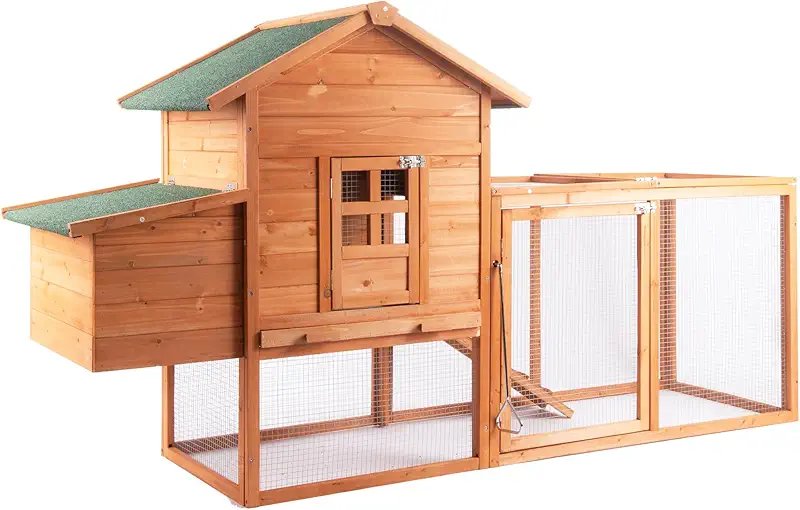
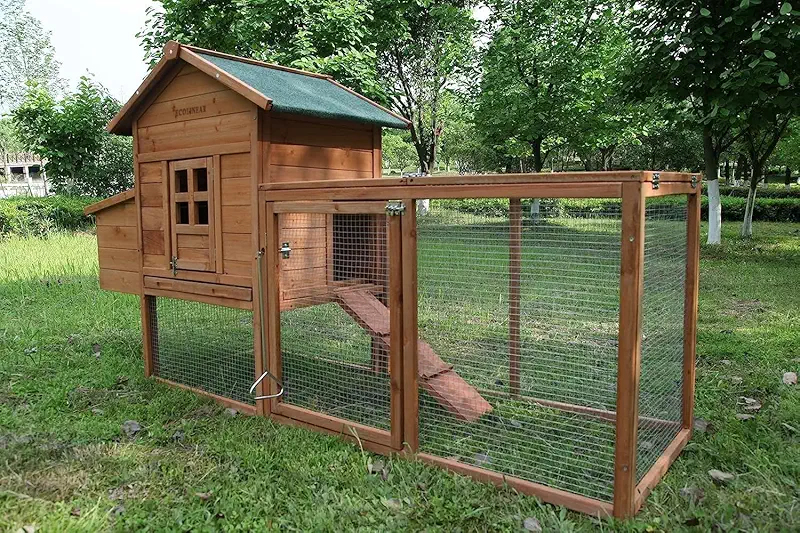
Small wooden backyard coop
Great for 2–4 hens, tight yards, and first-timers.
These are the little house-style coops with a built-in run that you see in a lot of backyards.
I put one like this behind my barn for my “retired ladies” that were still giving me a few eggs a week.
If you’re careful with the number of hens, and you tuck the coop out of the wind, these can be a fine start.
The weak spots are usually the roof, cheap hinges, and thin wire on the run.
Those are easy enough to stiffen up with a few boards and some stronger hardware cloth.
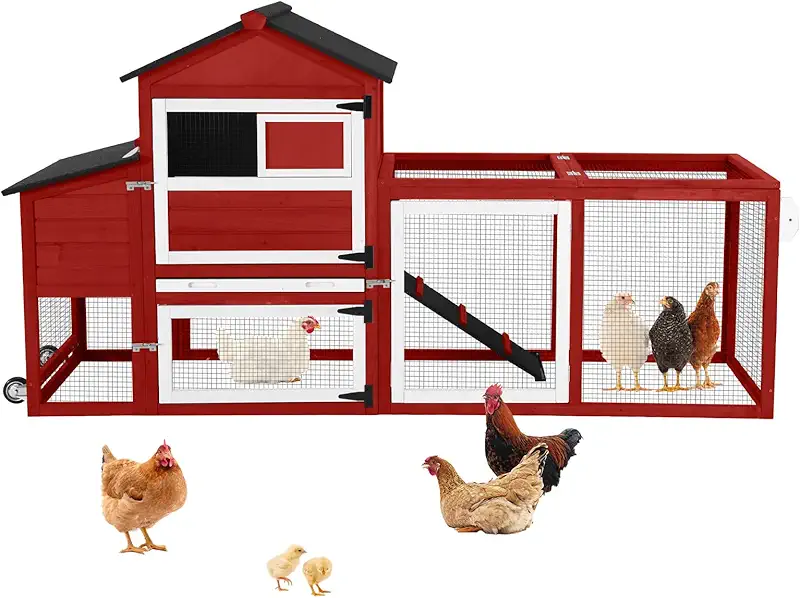
Mobile “tractor” style coop
Good for moving hens around the yard and fresh grass.
Chicken tractors are light coops on skids or wheels that let you move your flock around like a four-feathered lawn crew.
I run a pair of tractors behind my garden, and the hens pay their rent in bugs and fertilizer.
For cheap coops, tractors can be a good deal because they’re smaller and use less lumber.
Just make sure the frame is strong enough that it doesn’t twist when you drag it,
and that nothing can dig under the edges overnight.
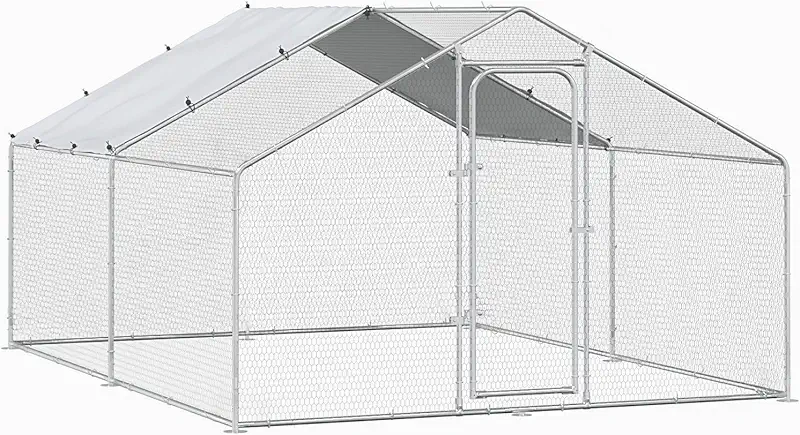
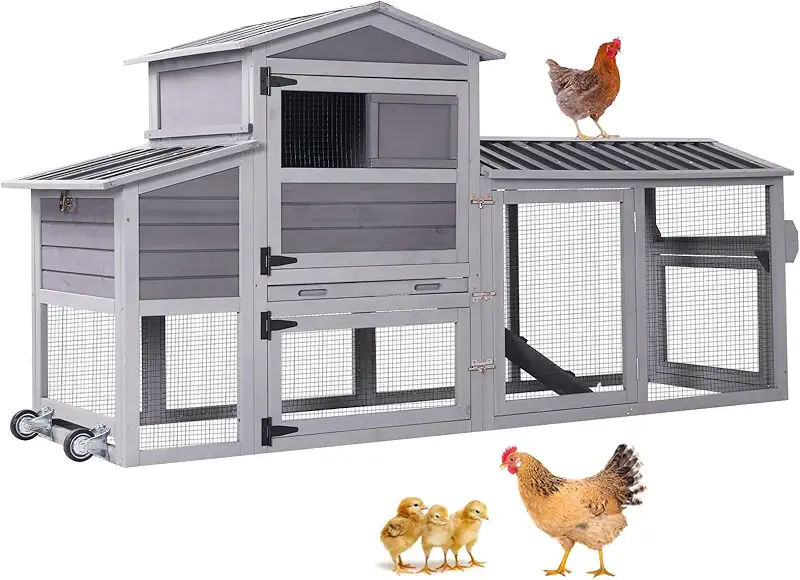
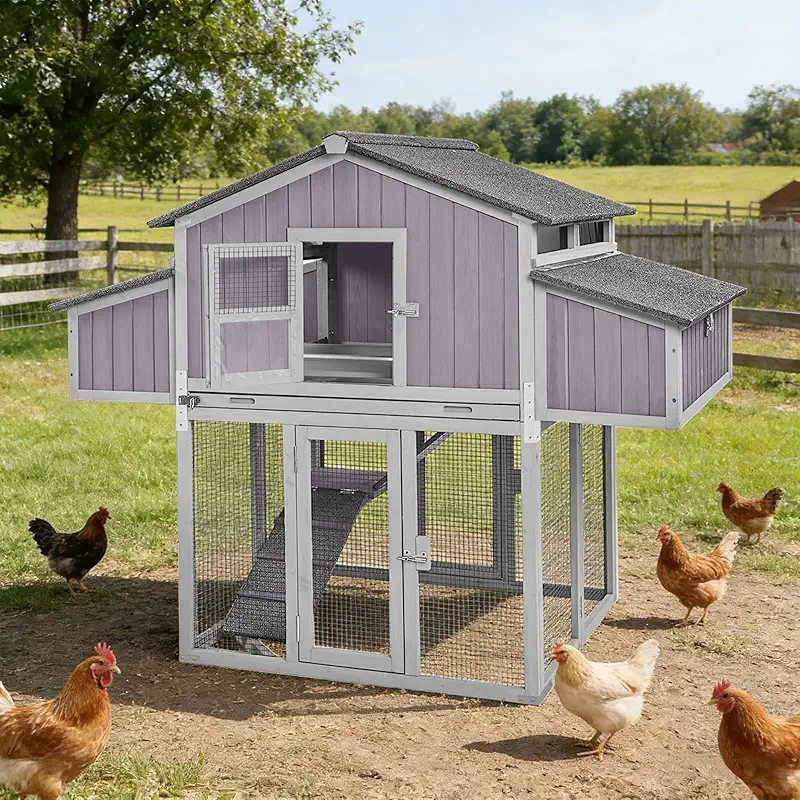
Medium combo coop with run
Best balance of price and space for most backyards.
This is the sweet spot for a lot of folks: a raised coop with a decent-sized run underneath
and out to the side. Room for 4–6 hens comfortably, easy egg access, and not such a beast to assemble.
My neighbor put one of these on pavers, added a bit of extra roofing, and it’s been holding up for years.
It started “cheap” but with a little love it turned into something that feels solid, not flimsy.
Walk-in coops and sheds
For bigger flocks and folks who like easy cleaning.
Once you get over 8–10 hens, bending over into a tiny coop loses its charm.
A cheap shed-style coop or walk-in run can be a real back-saver.
You get more flexibility with roosts, feeders, and deep bedding too.
I turned an old garden shed into my main layer coop.
If I had to do it again, I’d just start with a simple, budget shed and fit it out for chickens.
Sometimes “cheap” just means starting with the right shell and doing the smart work yourself.
How to judge quality when the price is low
Not every bargain coop is a trap. But when you’re chasing cheap chicken coops for sale near me,
you’ve got to look closer than the pretty pictures. Here’s how I size them up, same as I’d size up a used pickup.
1. Wood and frame
Press your thumb on the boards if you can, or zoom in good and close. If it looks like thin,
soft wood that would blow away in a stiff breeze, plan on adding some framing.
Pine is fine, but it needs reasonable thickness and a bit of protection from the weather.
I like to see solid corner posts and a frame that looks more like a small shed than a dollhouse.
2. Roof and rain handling
A leaky coop is a smelly, sick coop. Metal roofs are tough but can get hot in the summer sun.
Shingles or good solid panels with a bit of overhang are my favorites.
If you can, set your coop so water runs away from the run, not into it.
Mud and chickens don’t mix well unless you’re in the business of making dirty eggs.
3. Hardware and wire
Cheap latches and thin wire are where a lot of budget coops cut corners.
Raccoons have clever little hands and wake up right when you go to sleep.
Anything they can wiggle open, they will.
I always add:
- Stronger barrel bolts on doors and nesting-box lids.
- ½ inch hardware cloth over any flimsy wire sections.
- Extra screws where the factory used tiny nails or staples.
A few dollars of hardware turns “cheap and risky” into “cheap but solid.”
4. Ventilation without drafts
Hens don’t mind cold nearly as much as damp, still air.
A good coop has vents up high so moist air and ammonia can escape while the birds stay out of the breeze.
My winter rule is simple: you should be able to smell fresh air, not ammonia, when you step into the coop.
If it stings your nose, your birds are breathing that all night long.
Easy upgrades to make a cheap coop work for years
A lot of the cheap chicken coops for sale near me are “good bones, needs love.”
That’s not a bad thing if you’re willing to spend a little sweat instead of a lot of money.
Here are the first upgrades I usually make on any budget coop that lands on my place.
Raise it off the ground
If the coop sits straight on soil, the bottom boards will rot and the rats will throw a party.
I set mine on concrete blocks, treated 4x4s, or a simple skid frame.
A few inches of air under the floor makes a big difference.
Add real predator protection
I once lost half a flock in one night because I trusted a flimsy latch.
Woke up to feathers where the birds should’ve been. I don’t make that mistake twice.
Now I always:
- Use hardware cloth, not chicken wire, for lower walls and windows.
- Bury a bit of wire apron around the run to stop digging critters.
- Double-check latches before bed like I’m locking up the house.
Keep the bedding deep and dry
Deep, dry bedding is the cheapest “heater” you’ll ever buy.
I like pine shavings with a sprinkle of straw on top. A dry floor keeps feet healthy and smells a lot better.
In winter, I use a deep-litter style in my bigger coop. The hens scratch and stir it,
it breaks down slowly, and by spring I’ve got compost that my garden loves.
Make cleaning easy
The easier it is to clean a coop, the more often you’ll do it.
I learned that the hard way with a low, cramped coop that required me to crawl in on my knees like a raccoon.
Look for:
- Big doors for access, not tiny little hatches.
- Removable roost bars and sometimes a slide-out tray under them.
- A floor you can sweep, scrape, or shovel without gymnastics.
Farmer shortcut
If you can’t stand the thought of scrubbing, line any droppings tray with feed bags or cardboard.
When it’s dirty, you just roll it up and carry the mess to the compost pile.
Keeping laying hens happy in a budget coop
A cheap coop doesn’t have to mean unhappy hens.
With the right setup, your birds will lay just as well in a simple coop as they would in something fancy with a window box and porch railing.
Light, feed, and water
Hens are creatures of habit. They like the same feed, the same water spot, the same roost, night after night.
If you can give them:
- Clean water, not too far from the door.
- A steady layer feed with enough protein.
- Crushed oyster shell in a small dish for shell strength.
…they’ll pay you back in eggs. In winter, a little extra light in the morning can help,
but I usually just let my birds take a natural break. They’ve earned a short “vacation” after a long laying season.
Nesting boxes they actually use
Chickens like to lay in a quiet, somewhat dim spot.
They don’t care if the nesting box is designer or downright ugly, as long as it feels safe.
I keep nesting boxes:
- Off the floor, but lower than the roosts.
- With a good bed of shavings or straw.
- Facing away from the busiest part of the run.
I also put a golf ball or fake egg in there to give them the hint. Chickens are not the brightest, but they copy like pros.
Dealing with heat and cold
On my farm we get both: summer days where the hens are panting, and winter nights where the water bucket skins over with ice.
In a cheap coop:
- For heat: add shade, extra ventilation up high, and plenty of cool water.
- For cold: block drafts at bird level, keep bedding deep, and keep vents open up top.
I almost never run heat in the coop.
A dry, draft-free coop and a full crop of feed beat a space heater every time, and they don’t burn down the barn.
Old-timer wisdom
If your hens are huddled in a corner, something’s wrong: a draft, a bully bird, or a predator bothering them.
Content hens spread out, scratch, and mutter to themselves like little gossipers.
Real talk: when to walk away from a “bargain” coop
I’m all for saving money, but some cheap chicken coops for sale near me are only cheap because they should’ve been firewood.
I walk away when:
- The roof is basically cardboard and hope.
- The doors don’t line up even in the pictures.
- The run is so tiny that three hens would need traffic lights.
- Reviews (or neighbors) say it fell apart in one season.
Remember, you’re not just buying a box, you’re buying where your breakfast lives.
Those eggs you’re dreaming about are only as good as the coop keeping those hens safe and calm.
Cheap coop ideas if you like tinkering
If you’ve got more time than cash, there’s nothing wrong with grabbing a simple, affordable coop
and then stretching it with a bit of your own elbow grease.
Some of my favorite “cheap but clever” ideas:
- Add a simple hoop run: a few cattle panels or light tubing with netting makes a roomy, low-cost yard.
- Use pallets as windbreaks: set them around the run on the windy side and you’ve got instant shelter.
- Hang feeders and waterers: keeps the bedding cleaner and birds less likely to kick everything over.
- Old windows for daylight: just be sure to cover them with hardware cloth so nothing comes calling at night.
When you look at cheap chicken coops for sale near me, picture how they’ll look after you’ve put your own touch on them.
A basic frame and decent roof are all you really need to get started.
More coop styles you might bump into
Depending on where you live, when you type in cheap chicken coops for sale near me you might also see some less common setups.
I’ve tried or seen most of them in one form or another.
A-frame coops
These look like a little tent and are often very light. Great for a few hens and easy to drag to fresh ground.
Not my favorite in deep snow country, but in mild climates they can be a simple, cheap option.
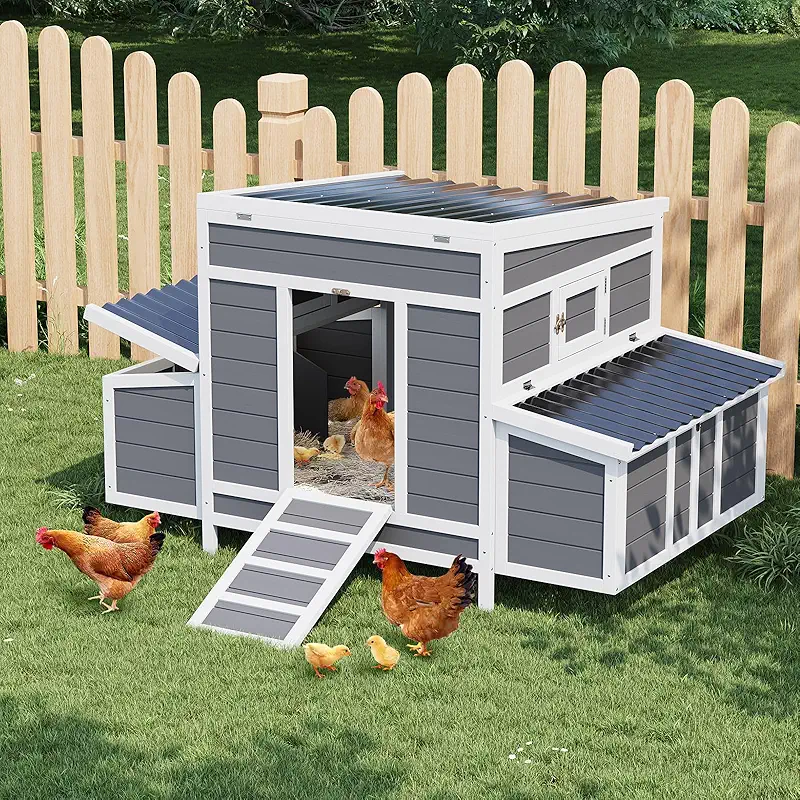
Plastic and composite coops
I was suspicious at first, but some of the plastic-style coops clean up easy and don’t rot.
The trick is making sure they’re still sturdy and don’t turn into a kite in a windstorm.
Converted sheds and mini-barns
If you’ve got a bit more room, a cheap yard shed converted to a coop is hard to beat.
A door you can walk through, real roof, solid walls—then you just add roosts, boxes, and a run.
FAQ about cheap chicken coops for sale near me
How many hens can I keep in a small cheap coop?
Most small budget coops claim they’re good for 6–8 hens, but that’s usually wishful thinking.
For real comfort and good laying, I treat those as 2–4 hen coops, depending on the size of the run.
Remember, crowded hens pick on each other and lay less, so “a little extra room” is the cheapest peacekeeper you’ll ever buy.
Are cheap chicken coops safe from predators?
They can be, but not always right out of the box. Many cheap coops use thin wire and weak latches.
I always add hardware cloth over the lower parts of the run, stronger latches, and sometimes a wire apron around the edges to stop digging animals.
With those upgrades, even a simple coop can stand up well to raccoons, foxes, and the rest of the night crew.
Will a budget coop last through winter?
That depends more on your weather and where you place it than on the price tag alone.
In cold, windy areas, I tuck coops behind a fence or building, add a windbreak, and keep bedding deep.
A cheap coop with a decent roof and dry floor, set out of the worst weather, can last years with a little patching and fresh paint now and then.
Is it better to build my own coop or buy a cheap one?
If you love tools and know which end of a hammer is which, building your own can be cheaper and sturdier.
But not everyone has the time or the lumber pile I do. A lot of folks buy a reasonably priced coop,
put it together, then strengthen it with better screws, hardware cloth, and a few boards.
That “buy then improve” path works well for many backyard keepers.
What’s the single most important thing in a cheap coop?
For me it’s this: dry, draft-free sleeping space with enough room on the roosts.
If hens can sleep up off the floor, out of the breeze, in a dry spot with decent air up high,
they’ll handle heat, cold, and most of life’s little annoyances.
Everything else—paint color, fancy trim, how cute it looks from the road—that’s just for us humans.
Ready to look at cheap chicken coops for sale near you?
By now you know what I look for when I hunt around for cheap chicken coops for sale near me:
enough space, a solid roof, real predator protection, and a coop I can clean without needing a chiropractor afterward.
You don’t need to spend a fortune, and you don’t need the fanciest setup on the block.
Your hens just need a safe, steady place to sleep, lay, scratch, and complain about you behind your back.
(Trust me, they do. I’ve heard them.)
If you keep those basics in mind, even a budget coop can turn into a long-term home for your flock.
Patch what needs patching, upgrade what really matters, and let the rest be “good enough.”
The eggs will taste the same either way—better, actually, because you’ll know you did right by your birds without emptying your wallet.