
I’ve been keeping laying hens here in the States for over thirty years, through hot summers, icy winters, and more early mornings than I dare count. Somewhere along the way I learned a simple truth: a cheap chicken coop with wheels can save your back, your grass, and your wallet, if you choose it wisely.
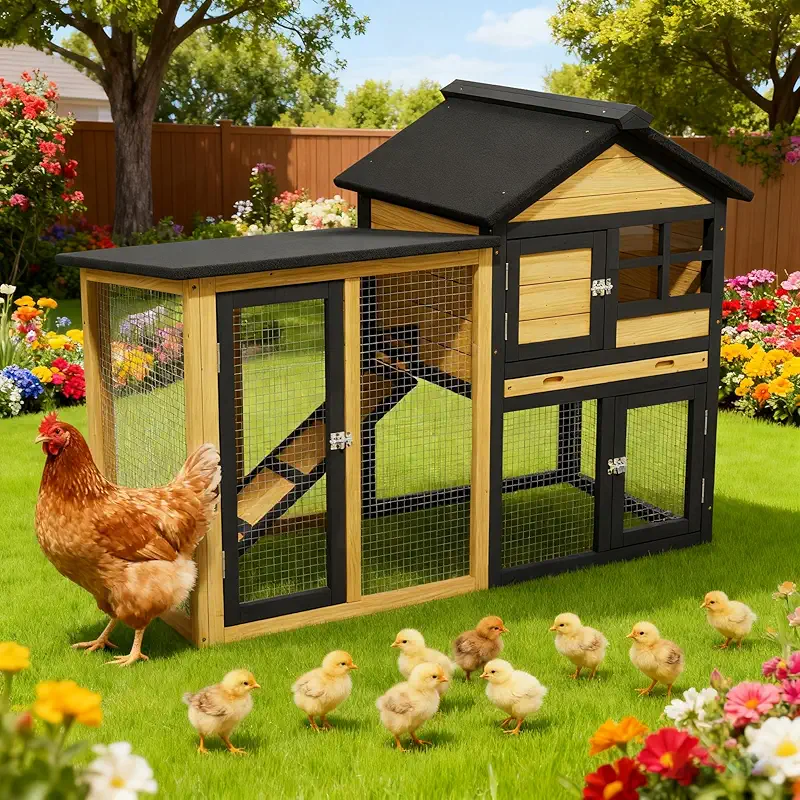
When I bought my first mobile coop, I thought, “Wheels are wheels, how hard can it be?” Well, after dragging a flimsy little box across the yard while my hens watched me like I’d lost my mind, I learned better. These days I look for a few key things: strong frame, decent wheels, safe wire, and a layout that keeps the hens laying steady and content.
The good news is you don’t need a fancy barn or a big bank account. You just need to know where you can cut corners and where you absolutely should not. That’s what we’ll talk about here, farmer to farmer, or farmer-to-be.
Why A Coop On Wheels Makes Farm Life Easier
If your coop never moves, your yard will tell the tale. One bare muddy patch, right under the run, smelling just about as bad as it looks. That’s how I started out. Once I switched to a coop with wheels, a whole lot changed for the better, and the hens thanked me with more eggs.
- Fresh grass under their feet instead of old mud and manure.
- Less smell because you’re not building a poop mountain in one place.
- Fewer parasites since you’re breaking the cycle by moving them.
- Cleaner eggs, because the whole place stays drier and neater.
- Easier yard care, as the hens “mow” and fertilize new spots.
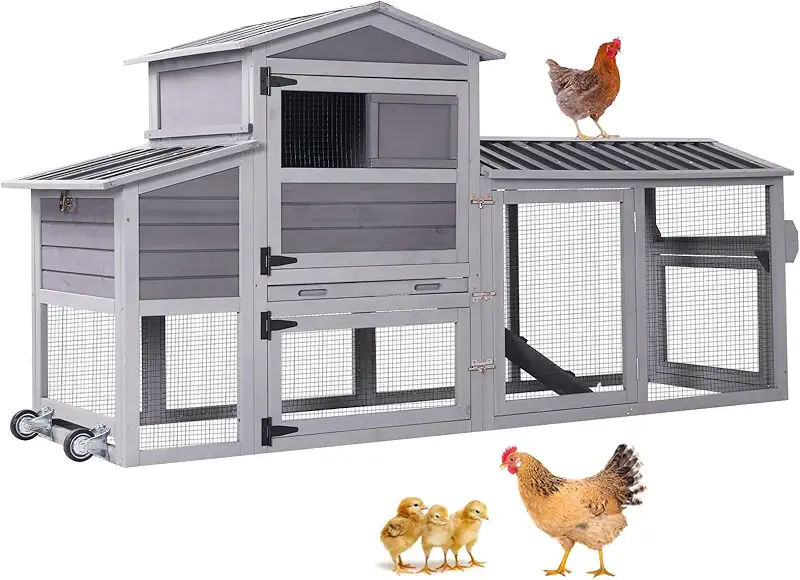
A cheap chicken coop with wheels is basically a small mobile home for birds. You pull it to a fresh patch, they work it over, you move again. It doesn’t need to be heavy or complicated. It just needs to roll well enough that you don’t blow out a knee trying to relocate it.
Where You Can Go Cheap (And Where You Shouldn’t)
I’m all for saving money. I build things out of scrap lumber and old screws more often than I admit. But when we’re talking about a coop, some parts can be cheap and some better not be. Here’s how I look at it.
- Thin but solid walls if your winters are mild.
- Simple roof design, as long as it doesn’t leak.
- Basic latches, if you add a backup carabiner.
- Smaller footprint when you keep just a few hens.
- Wheels and axle: need to be sturdy.
- Floor and frame: must hold up to moisture.
- Wire: no thin, brittle stuff predators chew through.
- Roof: rain and snow protection are non‑negotiable.
One of my “cheap experiments” was a coop with tiny plastic wheels. They looked cute in the photo. After one wet spring, the wheels were sunk half into the soil and I was out there with a come‑along trying to move the darn thing. The hens thought it was hilarious. I didn’t.
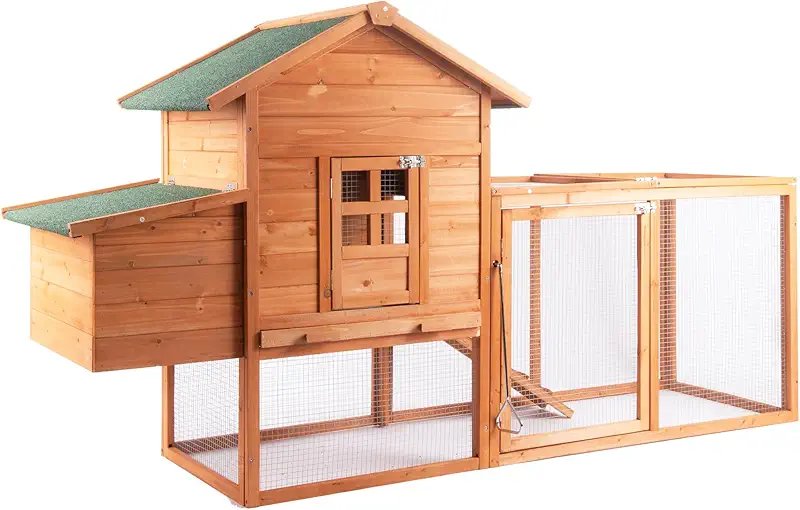
How Big Should A Cheap Chicken Coop With Wheels Be?
A big mistake folks make is squeezing too many hens into a tiny rolling box. Yes, it’s cheaper. Yes, they’ll survive. But crowded hens pick feathers, stress each other, and lay fewer eggs. I’ve watched that movie. Doesn’t end well.
For laying hens, I like at least:
- 3–4 square feet per hen inside the coop (where they sleep and lay).
- 8–10 square feet per hen in the run if they’re not out free‑ranging each day.
Many cheap coops with wheels are advertised for “4–6 chickens.” In my farmer brain, I immediately cut that number down. If the listing says 6, I call it a 3–4 hen coop, especially for larger breeds like Orpingtons or Plymouth Rocks.
Key Features I Always Check Before I Roll One Home
When I’m looking over a new cheap chicken coop with wheels, I run through the same mental checklist every time. Saves me from surprises later.
1. Wheels And Handle
The whole point of wheels is moving the coop without cussing. So I look for:
- Decent size wheels so they don’t sink into soft ground.
- Solid attachment to the frame, not a wobbly bolt through thin wood.
- A handle or bar that lets you pull without bending in half.
One of my better coops rolls like a little wheelbarrow. I grab the handle, tilt, and walk. If you’ve got hills or rough pasture, this setup is worth its weight in golden yolks.
2. Predator Protection
Around here we’ve got raccoons that can open latches, foxes that can dig, and the neighbor’s dog who thinks everything is a toy. Even with a cheap coop, I never gamble on safety. I look for:
- Sturdy wire, not thin decorative mesh.
- Latches you can lock with a clip or carabiner.
- Solid floor or wire floor that keeps diggers out at night.
I once lost two good layers to a raccoon that found a weak spot in the wire on a bargain coop I’d “try out.” Never again. Now even on cheaper setups, I reinforce the vulnerable spots the first weekend I get them.
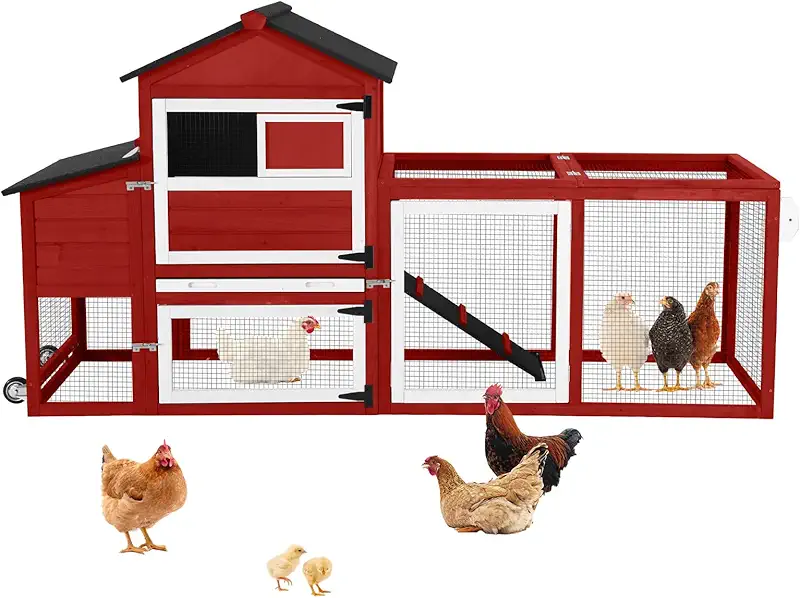
3. Nesting Boxes And Roosts
Happy hens lay better, and a lot of that comes down to where they sleep and where they lay.
- Nesting boxes – I like one box for every 3–4 hens. They’ll share, but not politely if there are too few.
- Roost bars – Round or slightly rounded 2x2s work well. Enough space so they’re not packed like sardines.
- Easy access for you – I’m too old to crawl on my knees to gather eggs every day.
My favorite cheap mobile coop has side‑opening nest boxes. I can be out there in my slippers, flip a lid, grab eggs, and be back inside before the coffee gets cold.
4. Ventilation And Weather Protection
Chickens can handle cold better than they handle damp air. A coop that stays dry and has good airflow makes all the difference.
- Vents up high so the moist air escapes without a draft on the birds.
- Roof overhang to keep rain off the openings.
- Some shade in summer; that mobile roof gets hot in full sun.
On a budget coop, I often add a little extra overhang or a simple tarp for shade in July. Not fancy, but my hens don’t care what it looks like as long as they can breathe and scratch.
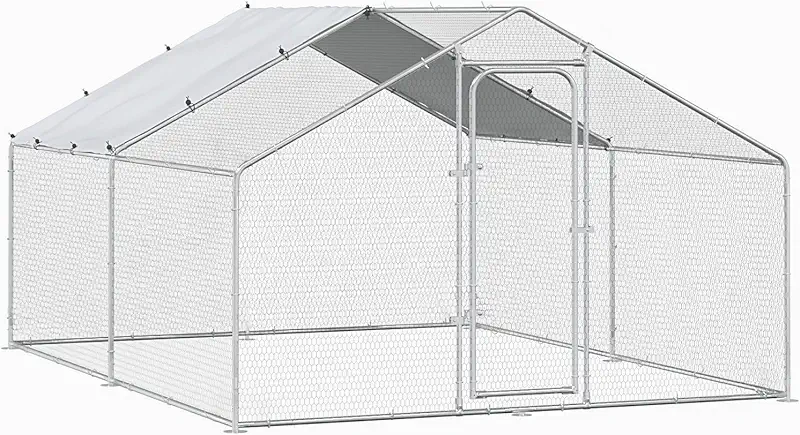
How To Place And Move A Mobile Coop
A cheap chicken coop with wheels works best when you treat it like a slow‑moving grazing system. You don’t just park it; you rotate it.
Here’s a simple pattern I’ve used for small backyards:
- Set the coop in one spot for 2–3 days.
- Watch the grass: once it’s scratched down but not bare, move one coop‑length.
- Let the old spot rest and regrow while the hens work a new patch.
If the ground is wet after rain, I move them a little sooner so they don’t turn it into a mud pie. Chickens are excellent at landscaping, just not always the way you planned.
Keeping Hens Happy In A Cheap Mobile Coop
You can spend a fortune on fancy coops and still have cranky chickens. Or you can use a plain, affordable coop with wheels and give them what they really care about:
- Regular feed and clean water.
- Enough space to flap and scratch.
- Dry bedding in the coop and nests.
- Shade in summer, wind break in winter.
I like to toss a handful of scratch grain in the grass right after I move the coop. The hens follow that coop like a parade, excited for new ground. They think I’m spoiling them; I’m just getting them to help me with pest control.
Real‑World Pros And Cons From My Own Flock
Over the years I’ve run fixed coops, big barn setups, and all sorts of mobile rigs. Here’s how a cheap chicken coop with wheels stacks up in my daily life.
- Yard stays greener and smells better.
- Easier to keep bedding dry and clean.
- Hens stay busy, so less feather picking.
- I can shift them away from the garden when the tomatoes are tempting.
- You do have to move it, even when you’re tired.
- Cheap wheels can stick in soft ground.
- Very small coops can feel tight in bad weather.
- If it’s lightweight, strong winds need to be considered.
Still, for a small backyard flock and a modest budget, I keep coming back to mobile coops. They fit the way most folks actually live: a few hens, not much space, and a desire to keep the neighbors on speaking terms.
Simple Upgrades For A Budget Coop
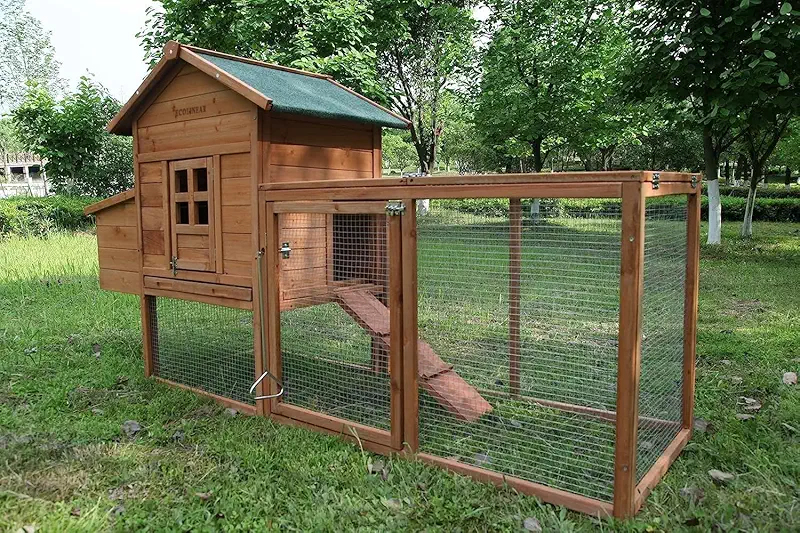
Even a basic cheap chicken coop with wheels can turn into a real workhorse with a few easy tweaks. When I bring a new coop home, I usually spend one weekend “farmer‑proofing” it:
- Extra screws in the frame so it doesn’t wiggle loose over time.
- Better latches plus a clip to stop raccoon hands.
- Extra strip of wood under the door to keep bedding inside.
- Roof sealer or extra shingles if the roof looks thin.
None of that costs much, but it turns “cheap and flimsy” into “cheap and dependable,” which is what I’m after.
How Many Hens I’d Put In A Cheap Mobile Coop
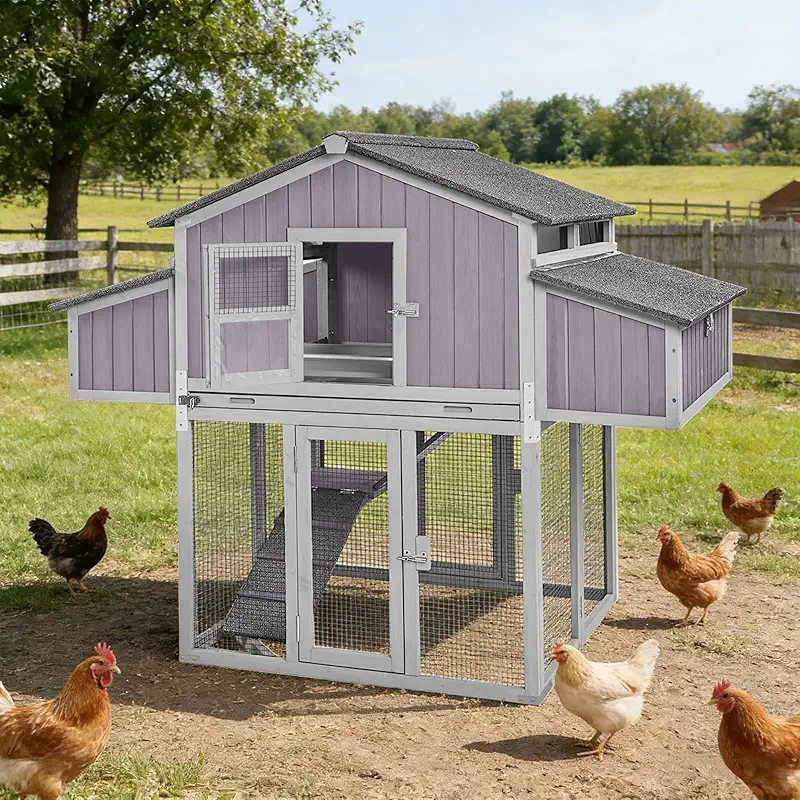
Let me give you a straight farmer’s answer, not a catalog answer. For the average small cheap chicken coop with wheels you’ll see online:
- If it says “up to 4 chickens” – I use it for 2–3 hens.
- If it says “up to 6 chickens” – I use it for 3–4 hens.
That way, there’s room to move, fluff feathers, and stay calm when it’s hot or rainy. Every time I tried to cram the full “advertised number” of hens in a coop, I ended up selling that coop and going bigger. Learned that lesson more than once.
Final Thoughts From An Old Farm Hand
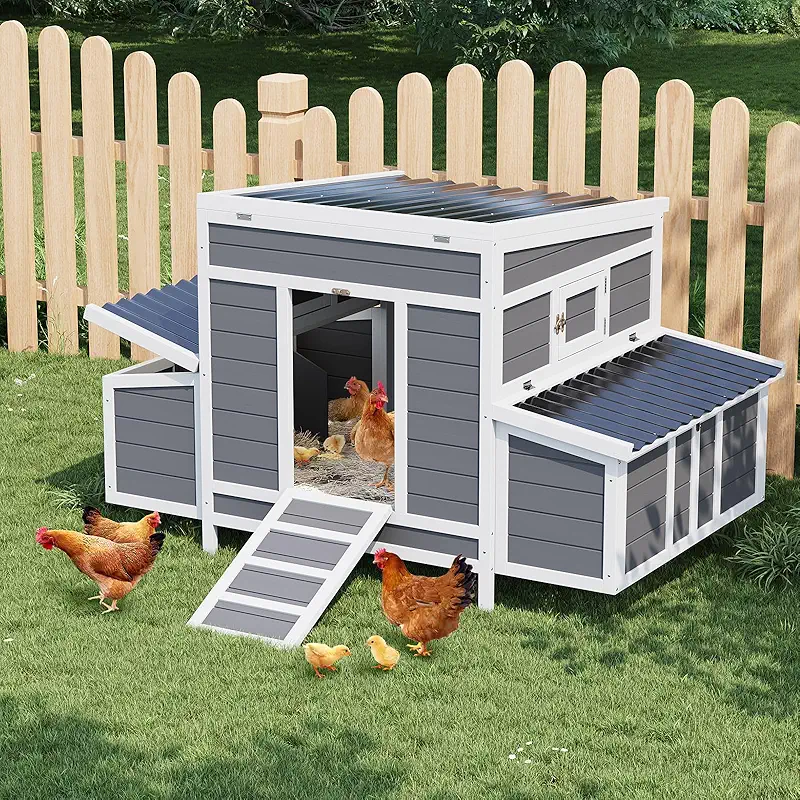
A cheap chicken coop with wheels is not about looking fancy. It’s about giving your hens a safe, dry place to sleep and lay, while letting you move them around without needing a tractor or a young back.
If you remember nothing else from this ramble, remember this:
- Don’t skimp on wheels, wire, or roof.
- Give your birds some elbow room.
- Plan on a few small upgrades to turn “cheap” into “reliable.”
Do that, and your hens will pay you back in eggs, compost, pest control, and the kind of quiet company that makes early mornings worth getting up for.