
buy large chicken coop
I’ve raised laying hens most of my life out here in the States, through snowstorms, heat waves, and one very determined raccoon. Let me walk beside you while you choose a big coop that keeps your birds safe, dry, and laying steady eggs for years.
Buy Large Chicken Coop
When folks ask me how to buy a large chicken coop, I always smile and say, “Plan for more chickens than you think you’ll ever want.” I said the same thing to myself thirty years ago, and I still ended up adding more hens, more nests, and more stories than I ever imagined.
A good big coop is more than a shed with birds in it. It’s a little village. It’s where hens gossip on the roost, where roosters brag at sunrise, and where your breakfast is quietly being made every day. If you set it up right from the start, you’ll save yourself money, chores, and headaches later on.
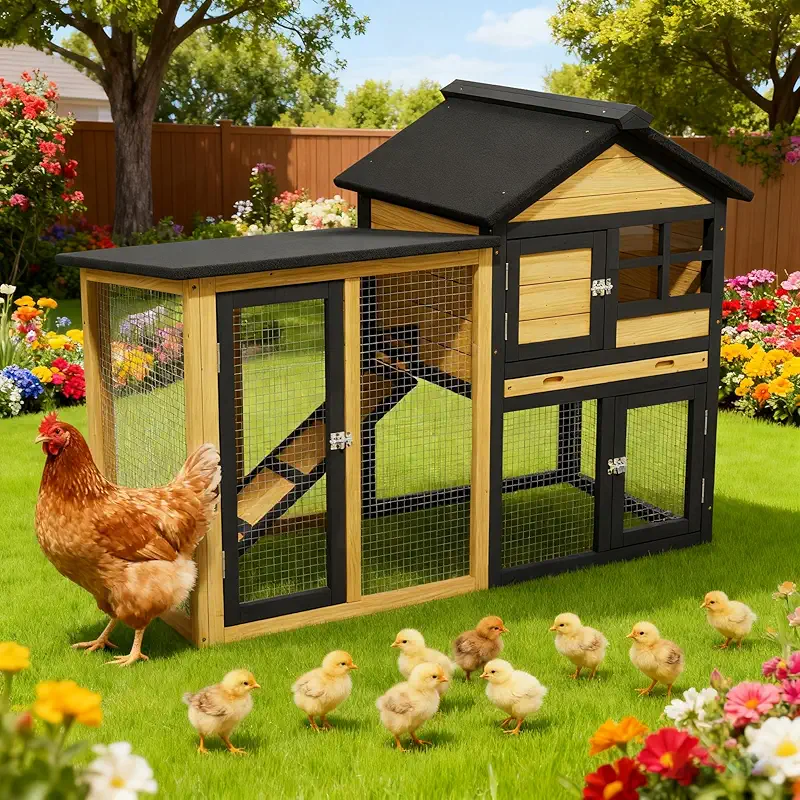
I’ve built coops from lumber scraps, bought metal kits in the middle of winter, and dragged prefab coops across the yard with my pickup. Some worked, some didn’t, and a few nearly blew away. What I’ll share here is the calm, tested advice I wish someone had sat me down and told me before I bought my first large coop.
Quick Size Checklist Before You Click
- 4–5 square feet per hen inside the coop
- 8–10 square feet per hen in the run
- At least 1 foot of roost space per hen
- 1 nest box for every 3–4 hens
- Room for feeder, waterer, and you to walk in
When you buy a large chicken coop, picture yourself in January, not just June. Imagine hauling water when it’s below freezing or collecting eggs after dark. If the inside of that coop is tight, low, and awkward, you’ll mutter about it every day. A few extra feet of room now is cheap compared with years of grumbling later.
How Big Is “Big Enough” For Laying Hens?
Every catalog picture makes coops look bigger than they really are. Chickens in photos are always standing still and being polite. Real hens shove, flap, and argue about who’s queen of the roost. That takes space.
As a rule I use:
- Inside the coop: 4–5 square feet per hen if they have an outside run, a bit more if they’re mostly inside.
- In the run: 8–10 square feet per hen, more if your winters are long and snowy.
- Roosts: at least 8–12 inches of roosting bar per hen.
If you want 10 layers, think of a coop floor around 40–50 square feet. That might be something like 5x10 feet or 6x8 feet. And if you’re like the rest of us, once you see those pretty eggs stacking up, you’ll add “just six more hens.” So when you buy a large chicken coop, consider what your flock might look like two or three years from now.
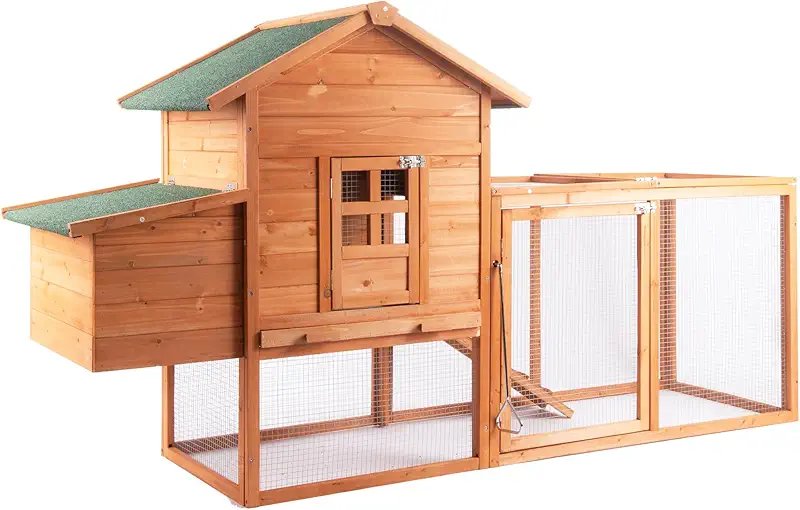
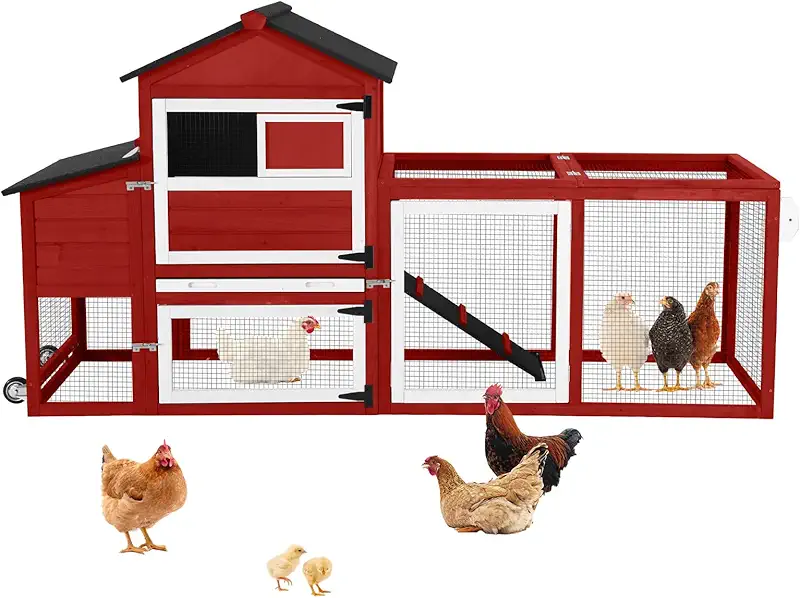
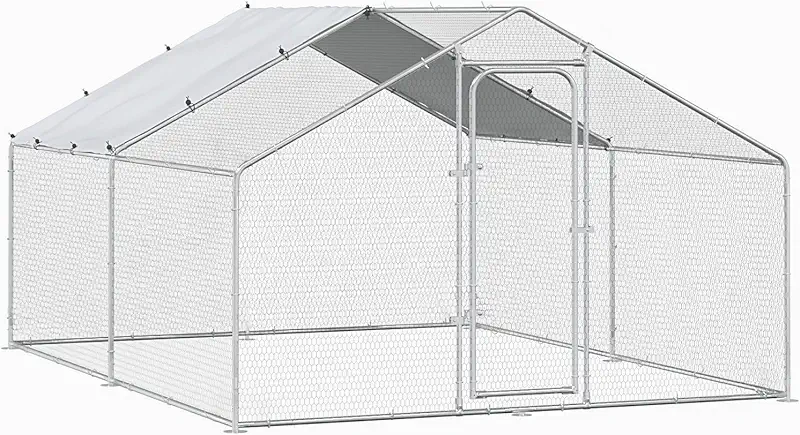
Overcrowding doesn’t just make the coop noisy. It shows up in bald backs, picked feathers, and cranky hens who’d rather fight than lay. A calm, roomy coop means better shell quality, steadier laying, and fewer health issues.
What I Look For When I Buy A Large Chicken Coop
Whenever I’m checking out a big coop online, I walk through the same mental checklist. I ignore the fancy paint and little windows shaped like hearts. Hens don’t care about that one bit. Here’s what I focus on instead.
1. Strong Floor And Predator-Proof Bottom
Raccoons, foxes, dogs, and even rats will all test your coop. If there’s a weak spot, they’ll find it the first week you go away for the weekend. When you buy a large chicken coop, pay close attention to what’s under the birds’ feet.
- Solid wood floor or hardware cloth with small openings (½ inch) if it’s a raised coop.
- No big gaps where a paw can reach through at night.
- If it sits on the ground, I like to run a skirt of hardware cloth out at least a foot all around.
One summer I got lazy and parked a new prefab coop straight on the dirt, thinking, “I’ll fix it next week.” A possum left me a hard lesson and a mess to clean up. Since then, I treat the coop floor like a bank vault door.
2. Real Ventilation, Not Just Cute Holes
Chickens breathe out a lot of moisture. Their droppings do too. In winter that turns into damp, chilly air that causes frostbite on combs and makes the whole place smell like a bus station. A good large coop has high ventilation that lets out moist air without blowing cold wind on the birds where they roost.
- Look for vents or windows up near the roof on at least two sides.
- Openings should be covered with hardware cloth, not chicken wire.
- Bonus points if the openings can be partly closed in bad weather.
3. Doors Big Enough For Real People
Many small coops have tiny little doors that are just big enough for a determined teenager to crawl through once. That’s cute in a picture, but not on a rainy night when a hen is sick and you need to get her out.
When you buy a large chicken coop, make sure there is:
- A chicken pop door the birds can use safely, low enough to step in and out.
- A people door big enough for you, a bucket, and maybe a jacket that shrank in the dryer.
I like to be able to step inside, stand up straight, and turn around without smacking my head on the roost. The older I get, the more I appreciate that.
4. Roosts And Nest Boxes In The Right Places
Hens want to sleep high and lay low. If the nest boxes are the highest spot, they’ll sleep in them and you’ll be collecting dirty eggs every morning.
- Roost bars higher than the nest boxes, but still lower than any windows where a draft might hit them.
- Nest boxes lower and a little darker, with a lip to keep bedding and eggs from rolling out.
- Enough nests that there’s not a line of impatient hens waiting their turn.
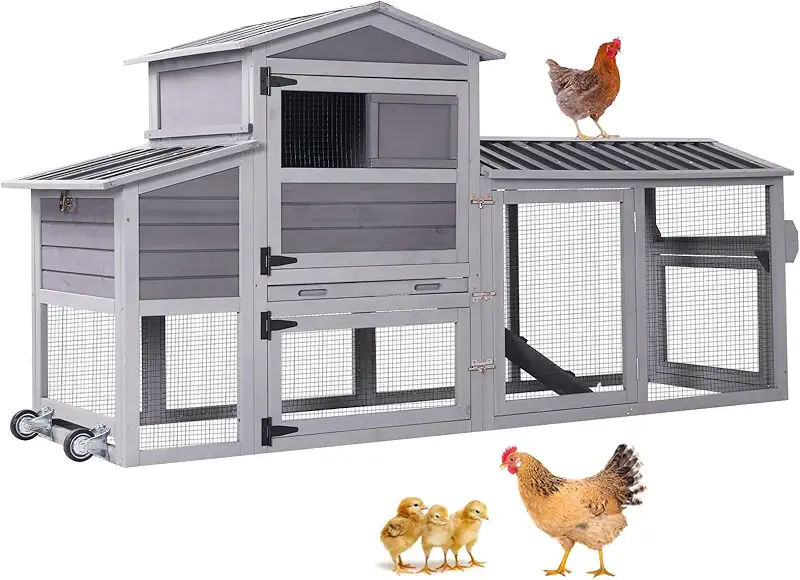
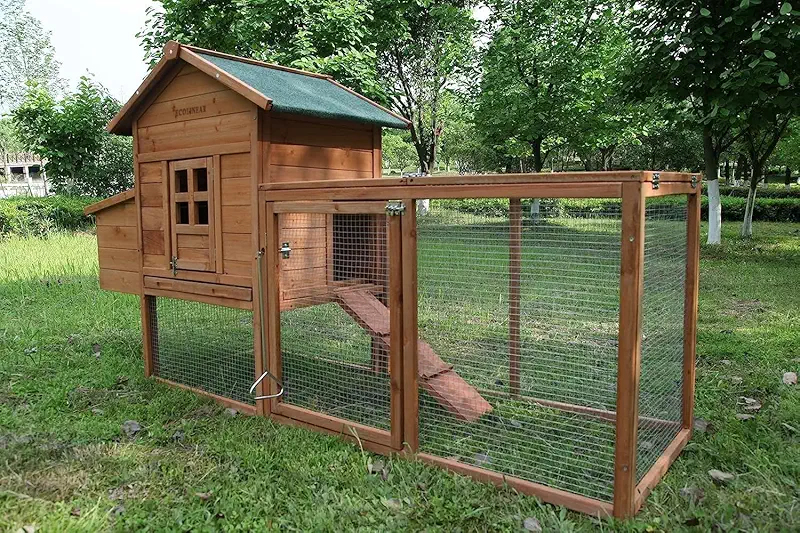
5. Room For Feed, Water, And Winter Chores
A large coop isn’t just for the birds. It’s also your little work station. Think about where you’ll hang a feeder, set a waterer, store a bag of bedding, and maybe a small can of feed. In deep winter, it’s a blessing to handle those things under a roof instead of in the wind.
When I look at pictures online, I picture a full-size metal trash can in there (my favorite feed bin) and ask myself, “Could I tuck that in a corner and still walk around?” That quick mind game has saved me from more than one too-small coop.
Materials: Wood, Metal, Or A Mix?
You’ll see all kinds of materials when you go to buy a large chicken coop. Most fall into three buckets: thin soft wood, heavier lumber, or metal panels. Each has its own personality, kind of like different chicken breeds.
Wooden Coops
Wood is warm, easy to tweak, and looks nice in the yard. But cheap wood can be as soft as a biscuit. I’ve had “budget” coops where a determined raccoon could almost carve its name in the siding.
If you lean toward wood:
- Check the thickness of the boards in the description or photos.
- Plan to seal, paint, or stain the exterior to make it last.
- Assume you’ll be adding extra screws and maybe a bit of bracing.
Metal Coops
Metal sheds and coops can last a long time and don’t care much about rain. But they can get very hot in full sun and loud in a storm. Chickens don’t mind a summer shower, but a metal roof in a hailstorm sounds like someone dropped a drum set on top of them.
If you go metal, try to:
- Place it where it gets afternoon shade.
- Add extra vents up high to let heat escape.
- Consider some insulation on the ceiling if you live where summers sizzle.
Hybrid Or “Barn Style” Coops
Some of my favorite large coops are a mix: wood frame, metal roof, hardware cloth in the right spots. When you buy a large chicken coop that looks like a tiny barn, you’re usually getting decent strength, good airflow, and a roof that sheds snow well.
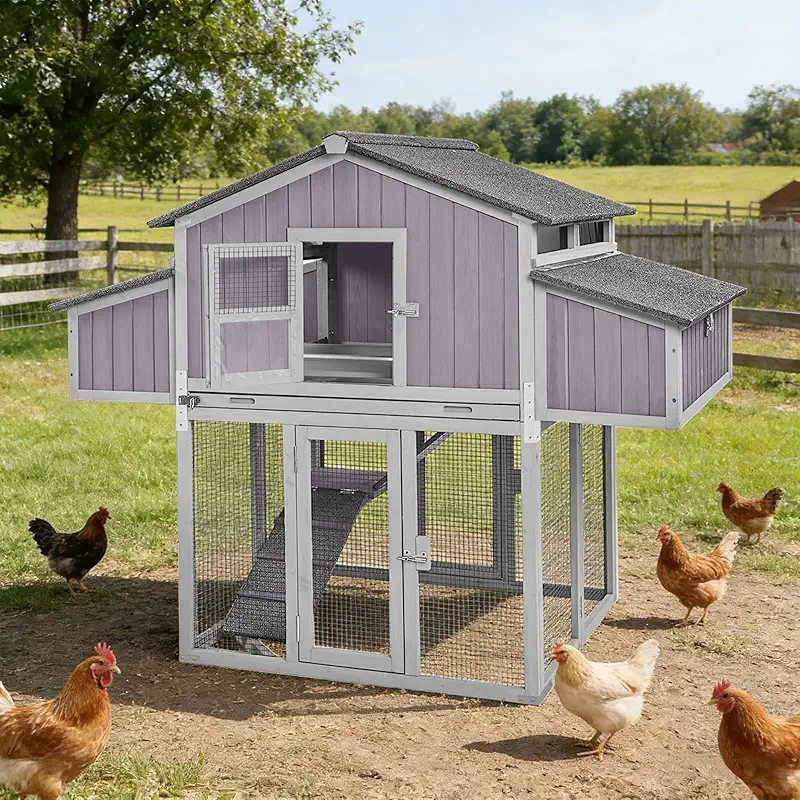
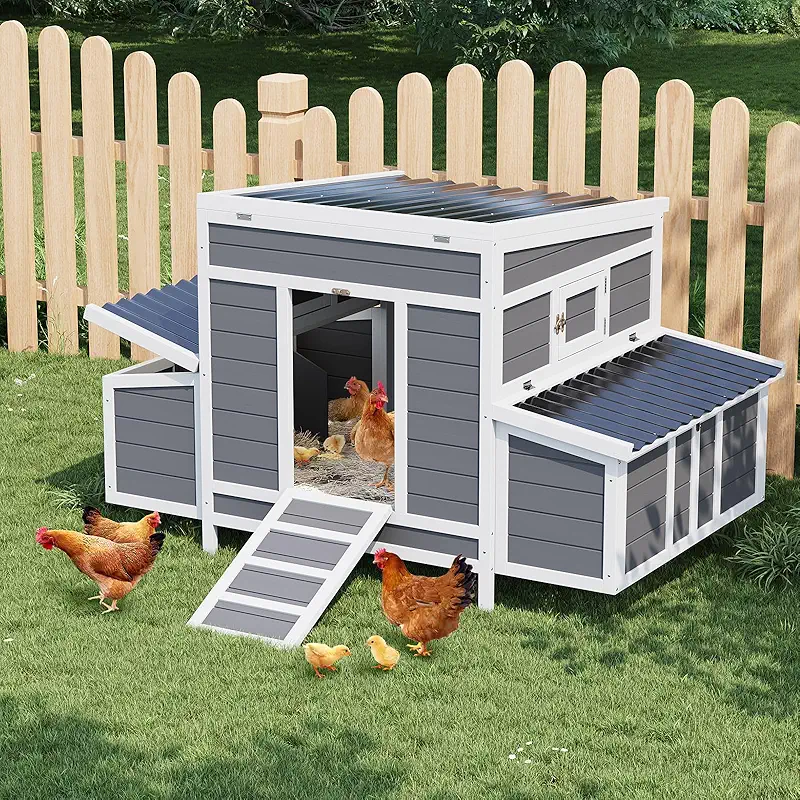
Keeping Egg Layers Happy In A Large Coop
A big coop gives you the square footage, but your hens still need the right setup to lay well. A stressed hen is an unproductive hen, and an unproductive hen just eats feed and complains.
Light And Laying
Laying hens like about 14–16 hours of light in the active season. In many parts of the U.S., winter days fall far short of that. In a large coop, I like to hang a simple light on a timer, coming on early in the morning, not late at night. That way they “wake up earlier” rather than getting surprised by sudden darkness.
Quiet Nest Corners
When you buy a large chicken coop, think about where the nests will be tucked. Hens prefer a spot that feels a little hidden and calm. If the nest boxes are right next to the main doorway where you tromp in and out in muddy boots, they may search for quieter corners and start hiding eggs.
I like nest boxes along a side wall, with a small overhang or curtain. An old feed sack cut into strips works just fine as a “privacy curtain.” Fancy isn’t required; peace and quiet is.
Fresh Air Without Drafts
Good air keeps respiratory problems down and odor under control. Bad air makes your eyes water and your birds cough. In a large coop, balance is key: vents up high to let moist air out, but no strong wind blowing across the roosts.
Personal Story: The Coop That Taught Me Patience
Years back, I rushed to buy a large chicken coop because a neighbor offered me a batch of pullets that were already laying. I skimmed the description, saw “up to 15 chickens,” and clicked before my coffee even kicked in.
When the flat boxes showed up, I realized “assembly required” meant “cancel your weekend plans.” The instructions might as well have been written by a bored raccoon. Holes didn’t line up, and half the screws were shy. I ended up reinforcing the whole thing with lumber from the barn.
But you know what? With some extra bracing, a better latch, and proper hardware cloth, that coop ended up serving three different flocks over the years. The hens didn’t care how many words I muttered putting it together. They just cared that it was dry, roomy, and safe.
The lesson for you: when you buy a large chicken coop, leave a little space in your budget, time, and patience for upgrades. A few extra boards, decent hinges, and predator-proof wire are worth more than most of the cute decorations in the pictures.
FAQ About Buying A Large Chicken Coop
1. How many chickens can a large coop really hold?
Ignore any number that sounds too generous. For laying hens, aim for 4–5 square feet per bird inside the coop and 8–10 square feet per bird in the run. If a coop says “good for 12 chickens” but the floor is only 24 square feet, I’d treat it as an honest 5–6 bird coop, not 12. Your hens will thank you with better laying and fewer squabbles.
2. Is it better to build or buy a large chicken coop?
If you’re handy with tools and already own them, building your own can be cheaper and stronger. But buying a large coop is faster and easier for most folks. What I often do is start with a bought coop, then add my own touches: an extra run, a bigger roof overhang, sturdier latches. Think of a store-bought coop as a solid starting point you’ll customize over time.
3. What’s the most common mistake with large coops?
People focus on the footprint and forget the inside layout. They end up with plenty of floor space but not enough roost room, or nest boxes in the wrong place. When you buy a large chicken coop, look at where the birds will sleep, where they’ll lay, and where you’ll feed and water them. A smart layout beats a few extra square feet of awkward corners.
4. Do I need insulation in a large coop?
Most laying breeds handle cold better than heat. In much of the U.S., good ventilation and a dry, draft-free coop shine brighter than insulation. If you insulate, be sure it’s covered so curious beaks can’t peck at foam or fibers. I’d rather see solid walls, deep bedding, and proper vents than fancy insulation done wrong.
5. What should I upgrade first on a new large coop?
My first three upgrades on almost any new coop are:
- Replace flimsy latches with strong ones that raccoons can’t open.
- Add hardware cloth over any big openings or chicken wire.
- Improve ventilation up high if the air feels stuffy.
After that, I look at roof overhangs, extra roost bars, and maybe a small covered area outside the pop door, so muddy days don’t turn into muddy nests.
If you’re feeling a bit lost in all the shapes, colors, and sizes, you’re not alone. Hens don’t care about fancy trim; they care about space, safety, and dry bedding. Keep those three words in mind while you buy a large chicken coop, and you’ll do just fine.
Take your time, picture next winter, and imagine yourself stepping into that coop with a coffee in one hand and a basket of fresh eggs in the other. That picture will tell you more than any sales line ever will.
Show me all coops