
Thinking about bringing hens into your backyard and wondering how to buy a chicken coop that really works, not just looks cute in a picture? I’ve raised laying hens for decades out here in the States, through icy winters, muddy springs, and summers hotter than a cast-iron pan. Let me walk you through what I learned the hard way so you don’t have to.
buy a chicken coop
When folks ask me how to buy a chicken coop, I smile, because I remember my first one. It was pretty as a postcard, painted bright red, little white trim, tiny windows. The hens loved it for about two weeks. Then the first real rain came, the floor swelled, the doors stuck, and I swear one hen looked at me like, “Nice job, rookie.”
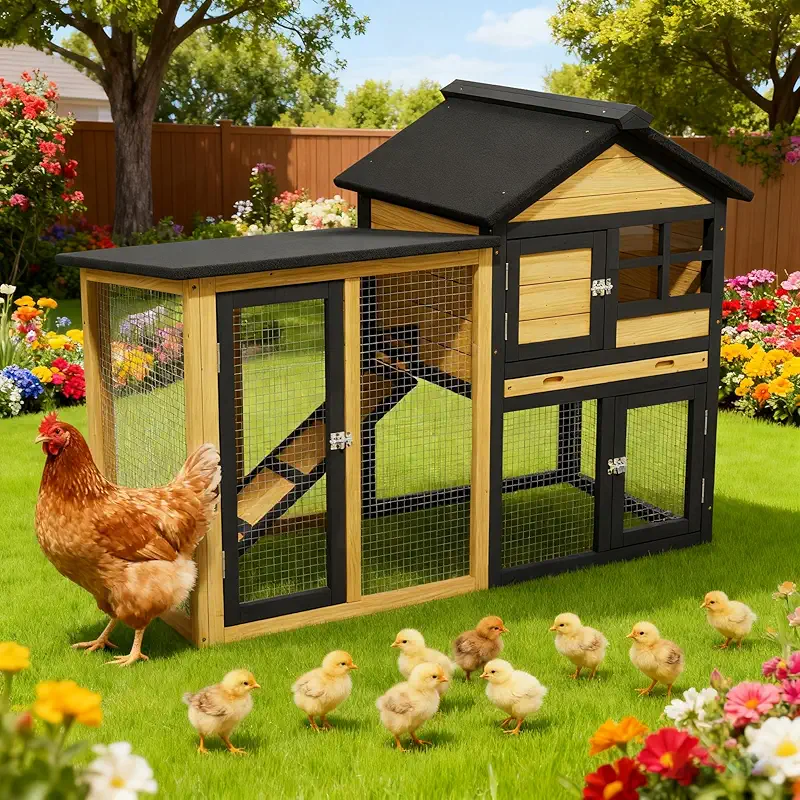
So if you want to buy a chicken coop that actually keeps birds dry, safe, and laying steady, you need to look past the paint job. Think like a hen, not like a catalog. Hens don’t care if the trim matches your porch. They care about dry bedding, room to scratch, and a safe place to sleep where a raccoon can’t say grace over them.
- Enough room inside for every bird to sit and sleep without piling on each other.
- Solid floor and roof that don’t leak, bow, or rot in one season.
- Real ventilation high up, not big drafts at chicken level.
- Strong hardware and latches that raccoons and possums can’t flip open.
- Easy for you to clean without crawling on your knees in the muck.
Once you see coops through that lens, all those pretty pictures online start to look different. You’ll catch yourself squinting at door hinges instead of flower boxes. That’s when you know you’re thinking like a farmer.
What I look for when I buy a chicken coop
These days, when I buy a chicken coop, I don’t start with color or with the “fits up to 8 hens!” claim. I start by picturing a nasty storm in February. If that coop can handle sideways rain, frozen doors, and a cranky farmer in big boots, then we’re getting somewhere.
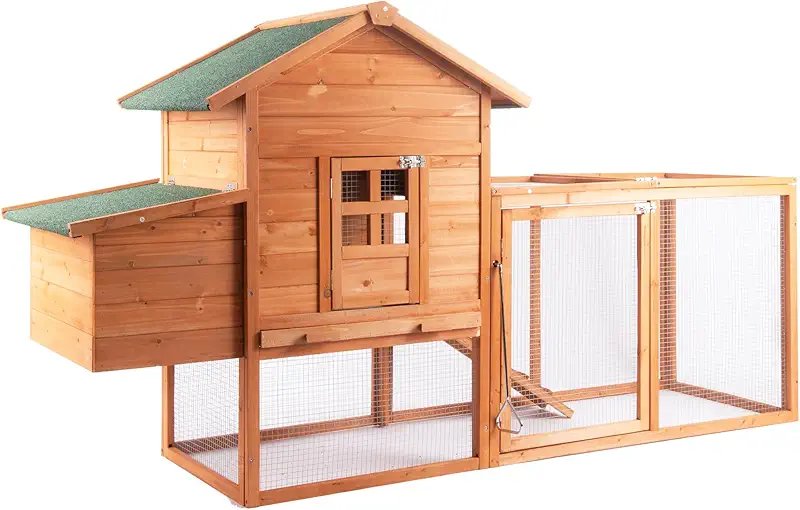
1. Predator-proofing, the unglamorous hero
If a coop can’t keep predators out, nothing else matters. I’ve lost birds to just about everything that walks, crawls, or slinks at night: raccoons, possums, foxes, and the neighbor’s dog that “never leaves the yard.”
Here’s what I check before I even think about buying:
- Wire type: I look for hardware cloth, not thin chicken wire. Chicken wire keeps chickens in; it does not keep hungry things out.
- Openings: Any gap bigger than a quarter is an open invitation to clever paws and sharp teeth.
- Latches: I prefer metal slide-bolt or locking latches. Anything simple, a raccoon will treat like a puzzle game.
- Floor and skirting: If the coop sits on bare ground, I want buried wire around the edge or a solid floor.
One old raccoon out here used to test every door at dusk. When I finally upgraded to better latches, he showed up for three nights, rattled around, and then I guess he put my place on the “not worth the trouble” list.
2. Ventilation without drafts
Chickens handle cold better than damp. That’s something a lot of folks don’t realize. You want air moving up and out, carrying moisture away from the birds, but not blowing straight across their backs on the roost.
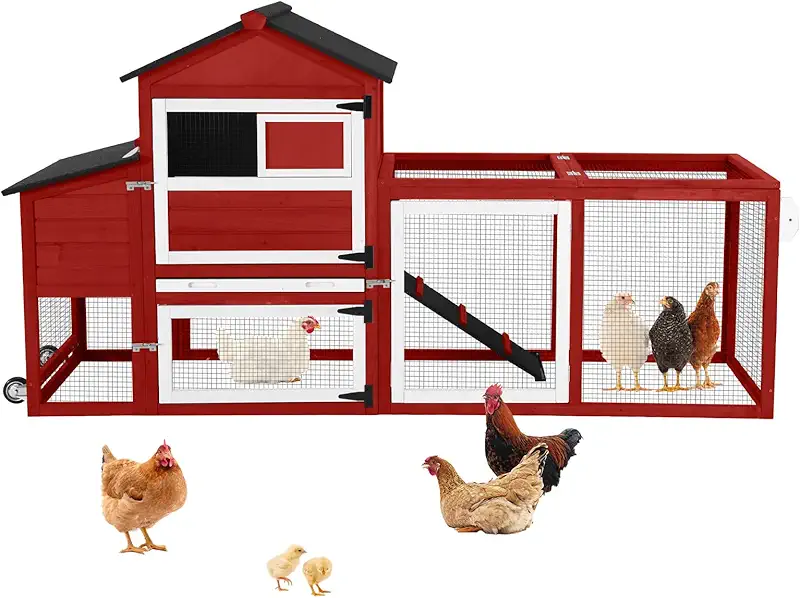
When I buy a chicken coop, I look for:
- Vents up near the roofline, preferably on more than one side.
- Windows that can open in summer and close or partly close in winter.
- Roof overhangs that keep rain from blowing into those vents.
If you can smell ammonia when you open the coop, your ventilation is not enough. I tell folks, “If it stings your nose, imagine being a foot tall and sleeping in it all night.”
3. Nesting boxes and roosts hens actually use
I’ve seen coops with fancy little “egg boxes” that hens wouldn’t use in a hundred years. Hens like their nests darker and quieter, away from traffic. And they like to roost higher than the nest boxes, or they’ll sleep where they should be laying.
- Nest boxes: About one box for every 3–4 hens is plenty; they share more than you’d think.
- Height: I like the nest boxes lower and the roosts higher, so birds don’t sleep in the nests.
- Roosts: A rounded or slightly flattened 2×2 or 2×4 board works better than a tiny dowel.
On my place, the same nest box has had a line of hens waiting at rush hour for years. Right size, quiet corner, just enough light. They’re creatures of habit, just like us with our favorite chair.
Wood, metal, or plastic? What really lasts
When you buy a chicken coop, you’ll see wood, metal, and plastic options. I’ve worked with all three, and they each have their own personality, kind of like farm dogs.
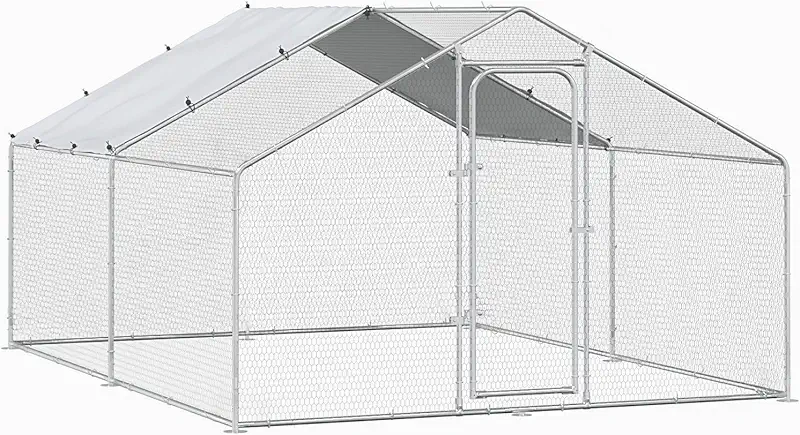
Feels natural, easy to repair, holds warmth. But cheap wood can rot fast if it’s not raised off the ground and protected from constant wet.
Tough shell, good against predators. They can get hot in summer and sweat with condensation in winter if you don’t have proper ventilation.
Easy to clean, lighter to move, no rot. Good ones are sturdy, but some budget plastic feels flimsy in strong wind.
My rule is simple: I’d rather have a modest, sturdy coop than a big, wobbly palace. The hens agree.
The last time I bought a plastic-style coop, I did it because I was tired of scraping every corner of an old wooden one for mites. That new coop had smoother surfaces and came apart enough for a good hose-down. Saved me time and saved the hens a lot of scratching.
Thinking ahead: cleaning, winter, and feed runs
When you’re ready to buy a chicken coop, don’t just think about day one. Think about the hundredth day, when the bedding is deep, you’re tired, it’s raining sideways, and your boots are full of mud. That’s when design matters.
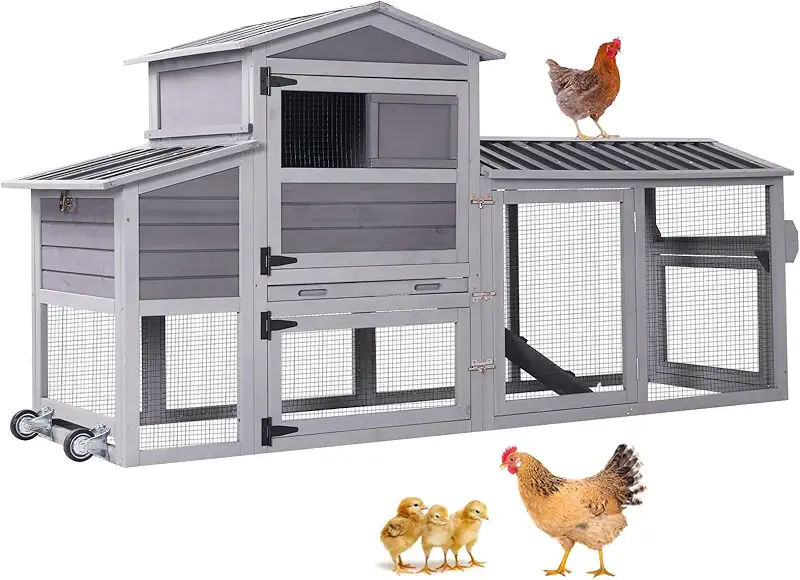
Easy cleaning saves your back
Here’s what I look for before I say yes to any coop:
- A wide main door so I can reach every corner without crawling in.
- Drop-down or slide-out trays under the roosts if possible.
- A roof height that doesn’t have me bumping my head every five minutes.
- Simple, not fussy, interior layout so muck doesn’t get trapped in little tight spaces.
The coop I use now lets me rake bedding straight into a wheelbarrow. What used to take me 40 minutes now takes 15, and that adds up over a year more than you’d think.
Winter and wind
Out here, winter loves to find every small gap around a door. When I buy a chicken coop, I picture the worst wind direction we get and see where the main openings sit. I want the roosts tucked on the calmer side of the coop, with vents that are high and sheltered.
I’m not afraid of cold air; I’m afraid of damp, stagnant air that freezes combs. A well-ventilated coop that’s dry will carry hens through winter just fine, especially the heavier laying breeds.
Run size, shade, and where to place your coop
Good coop, bad placement? That’s another lesson I learned from experience. When I first set a coop down, I was thinking about how close it was to the house, not where the sun hit or where the water pooled after a storm.
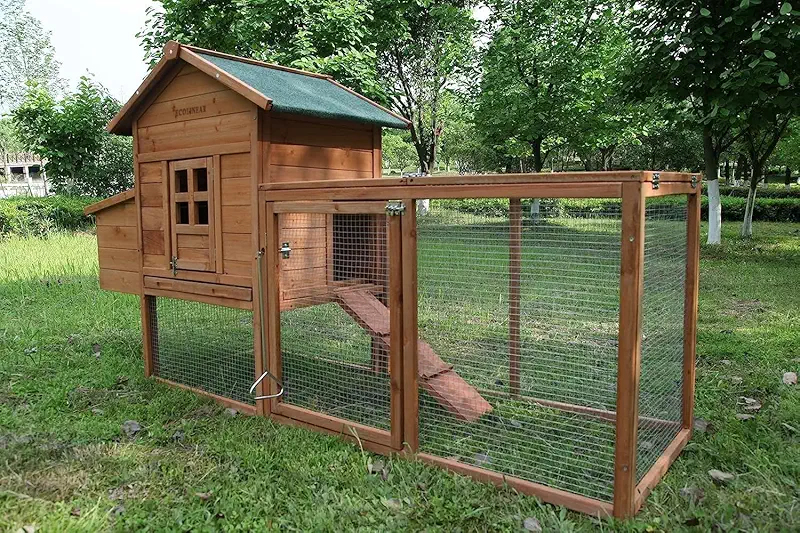
Now, when I plan to buy a chicken coop and set it up, I walk the yard first and look for:
- High ground: Water runs away from the coop, not toward it.
- Morning sun: Helps dry things out after dew and gets hens moving.
- Some afternoon shade: A tree or shade cloth keeps birds cooler on the worst hot days.
- Wind breaks: A fence, hedge, or building on the windy side helps in winter.
As for the run, bigger is kinder. Birds that can scratch, dust-bathe, and move around stay healthier and less bored. I like to hang a cabbage or a chunk of pumpkin in the run sometimes. Keeps them busy and keeps them from picking on each other out of boredom.
How to buy a chicken coop on a budget without regretting it
I know money doesn’t grow on trees. Every time I go to upgrade a coop, I can hear the feed bill clearing its throat in the background. But here’s the thing: a cheap, flimsy coop will cost you more in the long run, in repairs and maybe in lost birds.
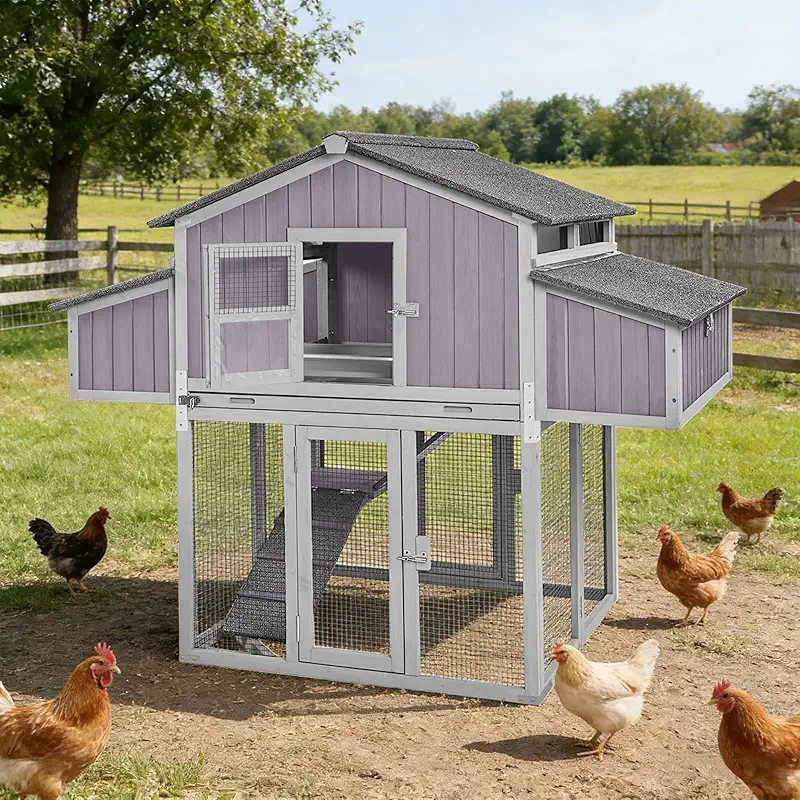
When you’re trying to keep the budget sensible, I’d suggest:
- Spend on structure first. Put your money into a solid frame, roof, and hardware. You can always pretty it up with paint later.
- Be honest about flock size. If you plan to “just start with 4 hens,” go ahead and admit you’ll probably end up with 8.
- Think about add-ons. Some coops let you extend the run or add another section later. That can be friendlier to the wallet.
The last time I upgraded, I picked a coop that looked a hair bigger than I needed. Good thing I did, because six months later there were “just two more” pullets in the brooder. Funny how that happens.
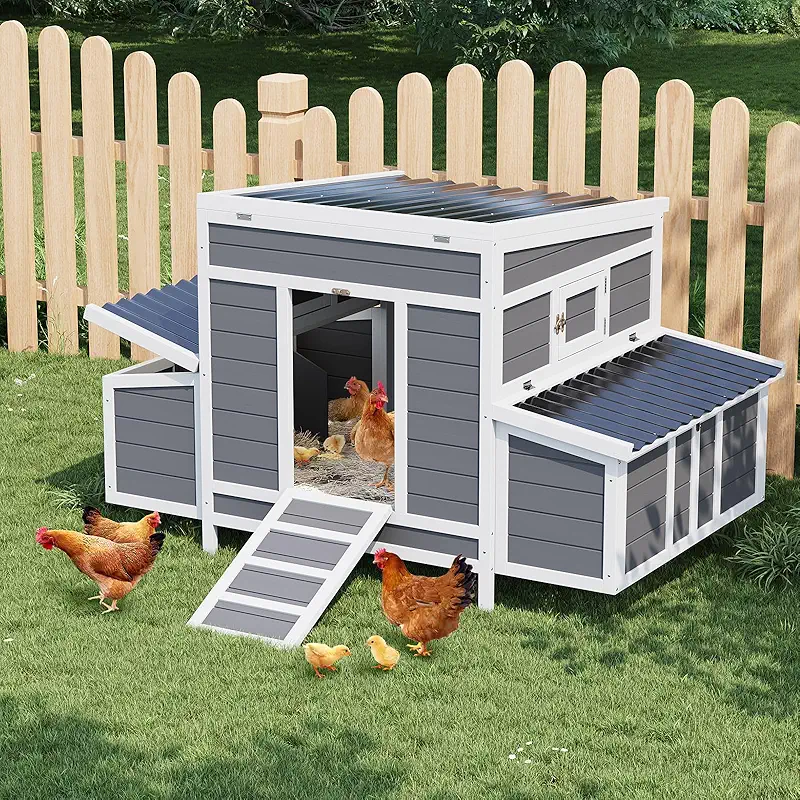
FAQ about how to buy a chicken coop and keep hens happy
How many chickens can I keep in a small backyard coop?
For a small backyard, I tell folks to start with 4–6 hens. That gives you plenty of eggs for most families without crowding your space. Aim for at least 4 square feet of indoor space per bird and a good-sized run. If your yard is really tight, it’s better to keep fewer hens that live well than cram too many in.
Is it cheaper to build or buy a chicken coop?
If you already have tools, scrap lumber, and some building know-how, you can sometimes build cheaper. But by the time a new person buys wood, screws, hinges, wire, and paint, a ready-made coop can end up about the same cost or even less. When I’m short on time, I’m not shy about buying a coop and then beefing it up where needed.
What is the most important thing when I buy a chicken coop?
Safety first, always. If a coop isn’t predator-proof, nothing else matters. After that, space and ventilation. I want each hen to have room to move and breathe fresh air without sitting in a draft. Pretty trim and flower boxes are last on my list, no matter what the pictures show.
Can I move a coop around my yard?
Yes, and that can be a big help for the ground and for the birds, especially if you’re using a lighter “tractor” style coop. Just remember, the bigger and heavier the coop, the more muscle it takes to move. I’ve had coops on wheels and skids, and I’ll admit, the first time I tried to drag one uphill, the hens looked more amused than I was.
Do I need electricity in my coop?
You don’t have to have it, but it’s handy. I run a safe outdoor-rated line to most of my coops so I can plug in a heated waterer in winter and a little light on the darkest days. If you’re just starting out, you can begin without power and add it later. Hens did fine long before anyone strung wire across a farm.
If you’re ready to buy a chicken coop, take a moment, think like a hen, and think like the future you who has to clean it in the rain. That little bit of extra thought now will pay you back with dry birds, steady eggs, and a whole lot less cussing at stuck doors.
Show me all coops